
People who research Botox treatments will find the term “Black Box Warning Botox” which makes them wonder if this warning should make them worry. The question stands as the most frequent inquiry that patients present before their initial medical visit.
The short answer is: a black box warning does not mean a drug is unsafe. The situation requires you to receive a direct and truthful explanation about all potential dangers. The article exists to deliver this exact information, which readers need.
What Is a Black Box Warning?
The FDA issues black box warnings, which serve as the highest level of safety alert for all prescription medications. The package insert of medications shows this name because its warning text appears inside a thick black border.
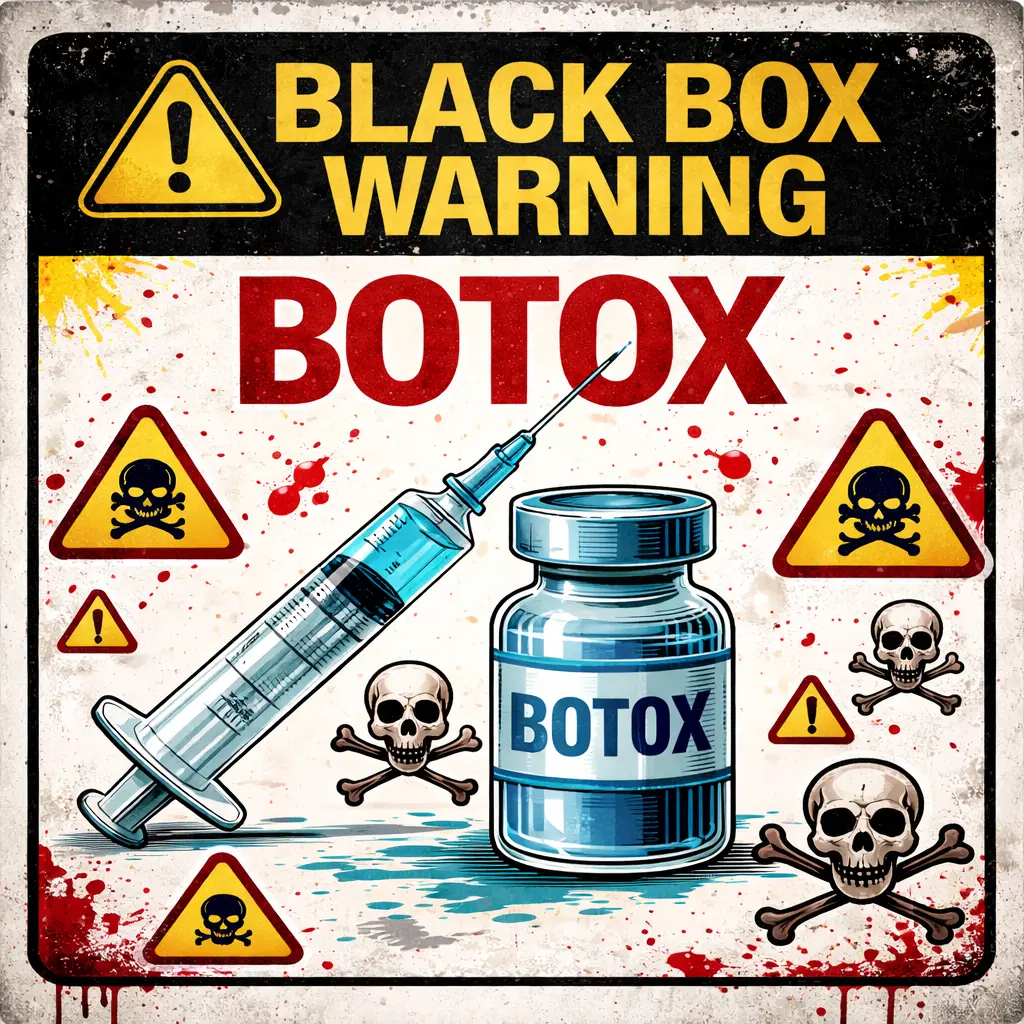
The FDA needs this label to appear on drugs that clinical testing has proven to produce major, dangerous side effects that could endanger life. The system exists to guarantee providers and patients receive complete information about each other before they start medical treatment.
A black box warning does not work as a complete prohibition. The warning appears on hundreds of medications which people take regularly, including Cipro and various antibiotics, antidepressants, blood thinners, and diabetes medications. The warning exists to inform, not alarm.
Does Botox Have a Black Box Warning?
The black box warning applies to Botox (botulinum toxin type A), along with Dysport and all other FDA-approved botulinum toxin products. The FDA issued the boxed warning for botulinum toxin in 2009.
The warning specifically addresses the distant spread of toxin effects. The botulinum toxin effect has been observed to spread outside of the injection area during uncommon occurrences, which result in patients developing:
- Muscle weakness
- Difficulty swallowing (dysphagia)
- Difficulty speaking or breathing
- Double or blurred vision
- Loss of bladder control
The main cause of these severe adverse events stems from medical treatments that used extremely high dosage levels to treat children who had cerebral palsy with muscle spasms and severe muscle spasticity, but did not receive cosmetic injections.
The Botox Black Box Warning and Cosmetic Use: What the FDA Data Actually Shows
The main point that people tend to ignore during their online conversations needs to be expressed clearly.
The FDA established its Botox black box warning because of medical cases that used high therapeutic injection doses instead of the standard cosmetic injection amounts that treat forehead lines, crow’s feet, and frown lines between the eyebrows.
Celibre Medical has conducted tens of thousands of cosmetic injections throughout its two-decade history of practice in Torrance, California. Our team has never encountered a situation where cosmetic patients experienced distant toxin spread after receiving proper injection amounts.
All qualified medical providers need to give the same level of importance to the FDA warning, which we treat with utmost seriousness.
Botox Black Box Warning: FDA Requirements: What Providers Must Do
Because of the Botox FDA black box warning, all providers are required to:
- Disclose the warning to patients before administering any botulinum toxin product, including Botox, Dysport, and Xeomin.
- Document informed consent, confirming the patient understands the potential risks.
- Use appropriate dosing that aligns with FDA-approved indications and established clinical guidelines.
- Monitor patients for any symptoms of toxin spread following treatment.
At Celibre, these steps are a standard part of every appointment, not an afterthought. Responsible informed consent is the foundation of ethical cosmetic practice.
Botox Boxed Warning and Distant Spread: Understanding the Real Risk
The phrase “distant spread of toxin effects” sounds alarming, but context matters enormously.
The majority of distant spread cases occurred when physicians administered unapproved high-dose botulinum toxin injections into neck muscles. The medical field studied platysmal band treatment through a famous case, in which doses were used that exceeded standard cosmetic levels. The patient experienced swallowing difficulties, which lasted for several months during their initial recovery period.
Our clinic at Celibre does not perform neck injections of Botox or Dysport to treat platysmal bands. The application operates at a level that exceeds established safety thresholds, so the dangers become more severe than the possible advantages.
Our clinical philosophy is conservative and evidence-based: we use the lowest effective dose, in the right anatomical locations, for the right patients.
Is Xeomin Safer Than Botox? Comparing Botulinum Toxin Products
Patients want to know if they should choose Xeomin instead of Botox because Xeomin does not contain the complexing proteins that appear in Botox and Dysport.
The honest answer: all FDA-approved botulinum toxin products carry the same black box warning. The FDA has evaluated Xeomin together with Dysport and Botox, which all demonstrate equal safety records when medical professionals follow proper usage guidelines.
The protein structure of Xeomin differs from other products according to scientific studies, which indicate it might lower the risk of patients developing neutralizing antibodies during treatment. The difference between these two products does not create any practical value for their typical cosmetic applications, which most patients would use them for.
The safety of any botulinum toxin treatment depends far more on who is injecting it and how than on which brand is used.
Why a Black Box Warning Doesn’t Mean Botox Is Dangerous
The black box warning system does not apply to aspirin, ibuprofen, and all other over-the-counter medications that have dangerous side effects. The FDA applies its boxed warning system to all prescription drugs that undergo intensive regulatory evaluation, but this process does not indicate that a drug is more dangerous than other available medications.
The FDA gave its first approval for Botox back in 1989. The treatment shows one of the most extensive safety records among all cosmetic procedures which people can get today. The United States performs millions of medical procedures each year which lead to only a tiny number of dangerous medical complications.
The black box warning shows that Botox requires medical professionals who have special training to handle the treatment because it functions as a powerful medical intervention.
How to Minimize Risk: What to Look for in a Provider
The single most important factor in your safety is the expertise of your injector. Here’s what you should look for:
- Licensed medical professionals not estheticians or non-medical staff
- Thorough informed consent process that includes explaining the Botox black box warning
- Conservative dosing philosophy and a willingness to say no to treatments they consider risky
- Clear, pressure-free consultations where your questions are genuinely welcomed
- Extensive experience with documented before-and-after results
At Celibre Medical, all cosmetic injections are performed by licensed registered nurses and nurse practitioners under physician oversight. We have over 80 years of combined injection experience and have treated more than 50,000 patients.
Frequently Asked Questions About the Black Box Warning Botox
1. Does Botox have a black box warning?
Yes. The FDA requires all botulinum toxin products which include Botox and Dysport and Xeomin to display black box warnings about their ability to spread toxin effects to distant body parts. The FDA established this warning in 2009 which affects every type of botulinum toxin injection that people receive for any medical reason.
2. What does the Botox black box warning mean for cosmetic patients?
For most cosmetic patients receiving standard low doses for wrinkles, the risk of distant toxin spread is extremely low. The FDA warning focused on cases which involved patients who received high amounts of therapeutic injections for their medical conditions instead of cosmetic treatments. Your provider needs to explain the warning to you before they will obtain your signed consent document which they must keep on record for medical procedures.
3. Is Xeomin safer than Botox because it doesn’t have a black box warning?
People commonly believe that Xeomin operates differently from Botox, but this belief lacks any factual basis. The FDA black box warning, which applies to Xeomin, matches exactly with the warnings that appear on Botox and Dysport products. All botulinum toxin products are regulated identically in this regard. Your provider needs to base product selection on their clinical expertise, while they should also consider your specific therapeutic needs.
4. What are the serious adverse events associated with botulinum toxin?
The most dangerous side effects arise from toxin spread to distant body parts, which causes patients to develop swallowing difficulties, speech problems, breathing issues, complete muscle weakness, double vision, and loss of bladder control. These have occurred primarily in patients receiving high therapeutic doses, not cosmetic doses.
5. How do I know if my Botox provider is qualified to administer the treatment safely?
Search for medical professionals who hold licenses as RNs, NPs, or PAs or physicians and who have specific training in cosmetic injection procedures. The doctors need to perform a complete evaluation, while they must explain all potential dangers, which include the black box warning, and they need to get written consent from patients before they start with low medication doses. The process needs to be monitored carefully because some providers speed through their work while they avoid discussing consent, and they provide suspiciously cheap services, which could indicate they take shortcuts with patient care.