
Menu
Sebaceous hyperplasia presents as tiny skin-colored bumps that appear on your facial skin but they never develop into pimples and they do not cause pain and stay on your skin indefinitely. The condition appears more frequently than people believe yet doctors have multiple proven treatment options that help patients.
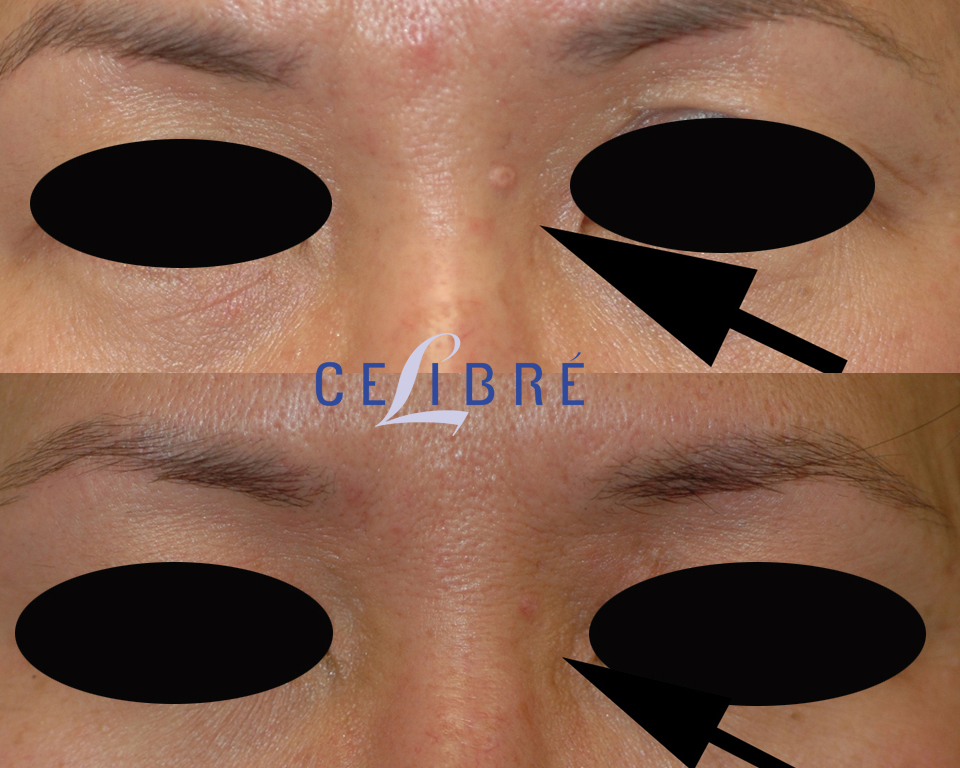
The skin disorder known as Sebaceous hyperplasia produces non-cancerous growths which develop from the sebaceous glands that produce oil in your skin. The term “sebaceous” describes the glands which produce oil in your body but “hyperplasia” describes the excessive growth of cells which leads to tissue expansion.
The body develops tiny bumps which show up as yellowish or skin-colored nodules that create a depression in their center most commonly found on facial skin. These conditions do not spread between people and they do not indicate any problems with personal cleanliness. People want to remove these growths even though they don’t pose any health threat.
If you’re searching for sebaceous hyperplasia photos to compare, here’s what to look for:
This is one of the most common reasons people mistake them for acne, milia, or even basal cell carcinoma. If you’re unsure, a qualified provider can evaluate your skin and confirm the diagnosis.
The forehead and nose usually show the most common signs but sebaceous hyperplasia can develop beneath the eyes and at the borders of the lips which creates more visible symptoms. The skin around the eyes and on the lips is thinner and more delicate, which can make these bumps appear more prominent.
People tend to react with greater concern when they discover sebaceous hyperplasia on their lips or along their lip line than when they find skin bumps in other facial areas. These skin conditions show the same appearance as fordyce spots which represent expanded oil glands so doctors need to identify them correctly before starting any treatment.
The question appears so often that I must respond which says that most of the time the answer is no.
The skin develops sebaceous hyperplasia which creates permanent changes in its structure unlike other skin conditions which disappear after some time. The gland itself has grown bigger and it will remain in this state until someone receives medical treatment. Research shows that skin diseases become more severe when time passes because of sun damage which accumulates on our skin as we get older.
Can sebaceous hyperplasia go away naturally? The body sometimes shrinks a single bump when its oil production decreases but the condition rarely disappears completely without medical help.
If you’re ready to treat these bumps, you have real options. Here’s what actually works and what to expect.
Sebaceous hyperplasia cauterization, which people refer to as hyfrecation, stands as the most accurate technique for removing this condition. The treatment method uses an electrical needle which produces focused thermal energy to destroy the large gland tissue while protecting the skin around it.
Why patients prefer hyfrecation:
Most patients see the treated bumps gradually fade and flatten over the following days to weeks. Multiple bumps can often be treated in a single session.
The CO2 laser functions as an excellent treatment option for sebaceous hyperplasia because it effectively manages patients who have multiple lesions and wants to achieve full skin renewal simultaneously. The laser operates at a high precision level to destroy the current tissue mass of the expanding gland.
Laser treatment for sebaceous hyperplasia provides patients who want to treat their sebaceous hyperplasia and improve their skin texture and reduce fine lines and pores with a single solution.
Retinoids, chemical exfoliants, and certain skincare products can slightly reduce the appearance of sebaceous hyperplasia, but they don’t eliminate the enlarged gland. These are better used as maintenance tools rather than primary treatments.
The best way to understand what to expect from sebaceous hyperplasia treatment involves viewing authentic before-and-after images which show actual patient results. Results vary depending on:
Patients develop a small crust on their treated areas after hyfrecation which disappears within seven days to show fresh skin underneath. The healing period after sebaceous hyperplasia laser treatment extends beyond typical treatments but patients achieve complete treatment results.
The skin condition known as Sebaceous hyperplasia bleeding develops when people attempt to squeeze the bumps which results in bleeding after they scratch or irritate the skin. The enlarged gland maintains a restricted blood flow which leads to small amounts of bleeding when someone injures the area.
People should avoid handling their skin growths at home because of the first reason which exists. The manual extraction process creates bleeding risk but fails to eliminate the gland which leads to scar development and infection risks.
Anyone with visible, enlarged sebaceous glands on their face can be a candidate for treatment. Sebaceous hyperplasia is most common in:
There’s no age restriction for treatment, and both men and women seek removal for cosmetic reasons. If you’re not sure whether your bumps are sebaceous hyperplasia, an in-person evaluation is the best first step.
No. Unlike a pimple, sebaceous hyperplasia isn’t filled with pus it’s an enlarged gland. Attempting to pop it won’t remove the gland and can cause bleeding, scarring, or infection. Professional removal is the only effective approach.
No. Both conditions create bumps on the face, but they’re different in cause and appearance. Acne is caused by clogged pores and bacteria, while sebaceous hyperplasia is caused by enlarged oil glands. Sebaceous hyperplasia bumps are not inflamed, don’t have a white or black head, and don’t respond to typical acne treatments.
Most patients achieve significant clearance in one to two sessions of hyfrecation. Larger or more numerous bumps may require follow-up treatments. Laser treatments may also be completed in a single session depending on the extent of the condition.
It’s possible. The treated glands are destroyed, but other oil glands can enlarge over time especially with continued sun exposure. Many patients benefit from periodic maintenance treatments and consistent use of broad-spectrum SPF to slow recurrence.
Hyfrecation involves a brief sensation similar to a small pinprick or mild sting at each treatment site. Most providers apply a topical numbing cream beforehand to improve comfort. The procedure is well-tolerated and typically completed in under 30 minutes.