
Menu
If you’ve been searching for answers on spider vein removal cost, you’re not alone. Millions of people deal with unwanted spider veins on their face, nose, and legs and the first question is almost always: How much will this actually cost me?
The honest answer is that it depends. But by the end of this article, you’ll have a clear picture of what drives the price, what each treatment involves, and how to get the best results for your budget.


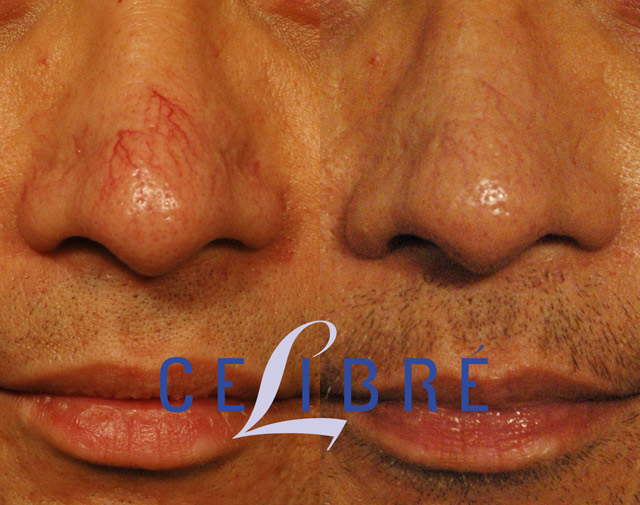
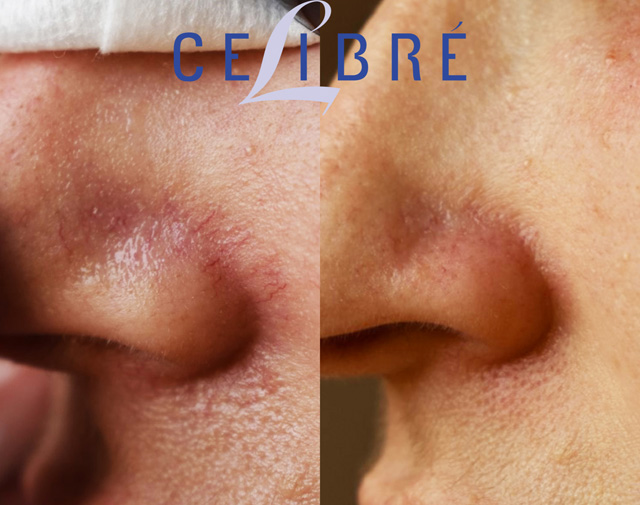
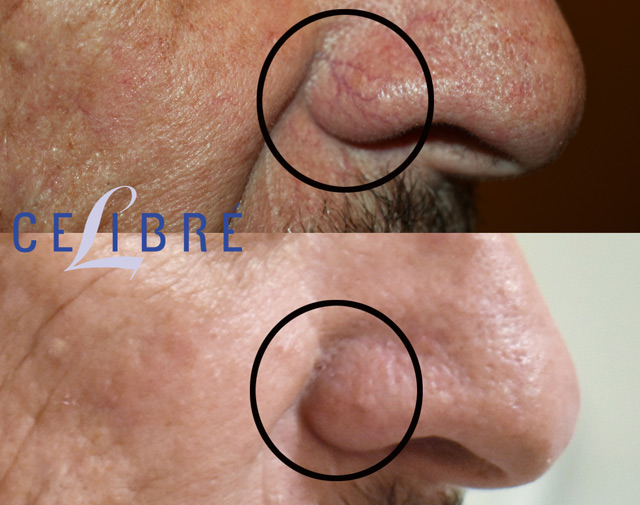
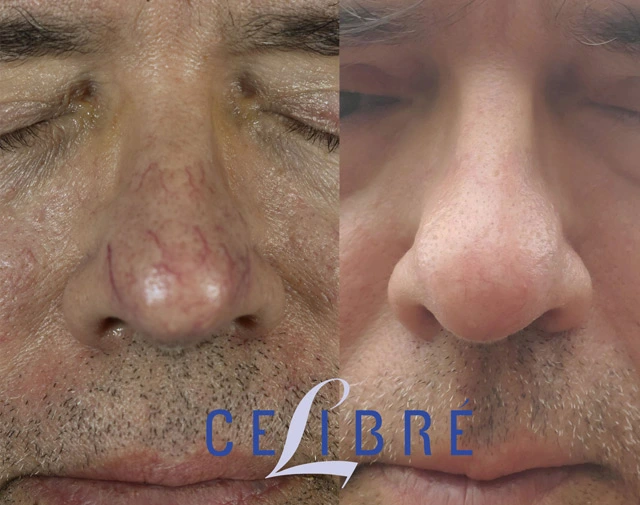
Spider veins are small, damaged blood vessels that appear near the surface of the skin. They often look like a web of red, blue, or purple lines most commonly on the face (especially the nose and cheeks) and legs.
At Celibre Medical Corporation, the cost of spider vein removal is shaped by three main factors:
Because no two patients are alike, your treatment plan and your price will be tailored specifically to you.
Sclerotherapy is one of the most effective treatments for medium to larger spider veins, particularly on the legs. It involves precise, skillful injections of a sclerosing solution directly into the affected blood vessels. This causes the vein walls to collapse and gradually fade from view.
You can generally expect to pay $300–$600 per session, depending on:
Some patients see significant improvement in just one session, while others may need two or three to achieve their desired results. The cost of sclerotherapy for spider veins is competitive when you factor in the durability of the results and the minimal downtime involved.
Vascular laser treatment is often the preferred option for facial spider veins including veins on the nose, under the eyes, and across the cheeks. Laser energy targets the pigment in the blood vessel, causing it to break down without damaging the surrounding skin.
Laser spider vein removal cost typically ranges from $300–$500 per session. This accounts for:
For facial spider vein removal cost specifically including broken capillaries on the face, spider angiomas, and nose vein removal laser treatment is often more targeted and efficient than injections. The session time is usually shorter, but the technology investment is higher, which is reflected in the pricing.
If you’re wondering about the cost of laser treatment for broken capillaries on the face, it falls within a similar range, since the same vascular lasers are used.
Yes, where your spider veins are located does influence your spider vein treatment cost.
Facial veins (nose, cheeks, forehead, under eyes) are typically treated with laser. These areas require precision and care given the delicacy of facial skin. The cost of spider vein removal on the face may be slightly higher per session due to the technical demands.
Leg spider veins are more commonly treated with sclerotherapy, though laser can be used for smaller vessels. Because leg veins tend to cover larger surface areas, spider veins on legs treatment cost can add up over multiple sessions but results are long-lasting and highly satisfying.
One of the most common questions patients ask is whether they’ll need one treatment or a combination. The truth is sometimes both are necessary for the best outcome.
For example, a patient with spider veins on the legs may need sclerotherapy for larger feeder veins and laser for the finest surface capillaries. A patient with facial telangiectasia may need a series of laser sessions to fully clear the area.
At Celibre, we never apply a one-size-fits-all approach. We build a custom treatment plan using the most current methods available designed to give you the best results in the fewest number of sessions.
In most cases, spider vein removal is considered a cosmetic procedure, which means insurance typically does not cover it. This applies to both sclerotherapy and laser treatments when performed purely for aesthetic reasons.
If you’re considering cost of spider vein removal without insurance, many clinics (including Celibre) offer flexible pricing and can walk you through what to expect financially before you commit to anything.
When it comes to laser treatment for spider veins cost, you’re not just paying for the procedure you’re investing in the expertise behind it. At Celibre Medical Corporation, our injectors and laser specialists are among the most skilled and experienced in the field.
We believe that value comes from results. Our goal is always to help you look your best in the shortest number of treatments, at a cost that makes sense. That’s what makes our approach to vascular laser treatment stand out.
The average spider vein removal cost ranges from $300 to $600 per session, depending on whether you need laser treatment, sclerotherapy, or both. Facial treatments and leg treatments may vary in price based on the size and number of veins.
This depends on the severity of your spider veins. Some patients see full clearance after one or two sessions; others may need three or more. Your provider will give you a realistic estimate after evaluating your veins in person.
Not significantly. Laser vein removal typically costs $300–$500 per session, while sclerotherapy ranges from $300–$600. The right choice for you depends on the location and size of your veins, not just cost.
In most cases, no. Spider vein removal is considered cosmetic and is not covered by standard health insurance plans. Some exceptions exist if the veins are causing medical symptoms, but this is uncommon.
Spider veins are smaller, surface-level vessels typically treated with laser or sclerotherapy. Varicose veins are larger and may require more intensive procedures. The cost of treating varicose veins is generally higher, and they’re more likely to have a medical insurance component depending on severity.