
Your skin develops flat brown patches, which start appearing as sunspots on your facial area, your neck, and your hands. People believe these skin blemishes, which people call liver spots and age spots, will become part of their aging process.
The truth? They are actually history lessons written on your skin. The skin shows its present discoloration because UV rays have caused damage to the skin throughout multiple years, which began during my early years.
The guide shows you how to remove facial sun spots while it explains what causes them and provides dermatological treatment options and preventive measures.
What Are Sunspots on Face and Why Do They Form?
Before looking at how to remove sun spots, it helps to understand what they actually are. The medical term for sunspots is solar lentigines, which develop when extended UV exposure causes your body to generate too much melanin pigment, which determines your skin tone.
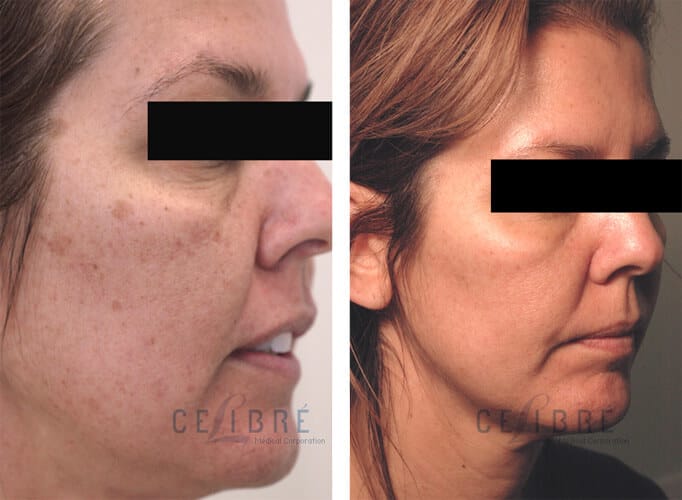
The clumping process of melanin leads to the development of permanent dark spots, which remain visible on the skin. Sunspots continue to exist throughout the year because they do not disappear naturally like freckles, which tend to fade during winter. They need specific treatments to reduce their appearance until they become completely invisible.
Sunspots vs. Freckles vs. Age Spots
- Freckles: Smaller, genetic, and often fade when you stay out of the sun.
- Sunspots / Age Spots: Larger, caused entirely by UV exposure, and remain permanent unless treated.
- Melasma: Larger, patchy discoloration typically triggered by a mix of sun exposure and hormonal shifts.
How to Get Rid of Sunspots on Face and Body Safely
When searching for the best treatment for Sunspots on Face concerns, you will find options ranging from daily topical skincare to advanced in-office medical procedures.
1. High-Performance Topical Skincare (At-Home Care)
For mild discoloration, specific active ingredients can help lighten sun spots over time by slowing down melanin production or speeding up cellular turnover.
- Retinol and Retinoids: Does retinol help with sun spots? Yes. It accelerates skin cell turnover, helping to fade hyperpigmentation naturally.
- Vitamin C: A powerful antioxidant that blocks the enzyme responsible for melanin production while brightening the skin.
- Hydroquinone or Kojic Acid: Potent skin-lightening agents that target deeply pigmented cells.
2. Class IV Medical Laser Solutions (The Gold Standard)
People who want to eliminate their sun spots from facial surfaces at fast speeds should choose advanced laser technology because it delivers permanent results. The Q-Switched and Pico medical lasers which belong to Class IV category break down dark melanin pigment by applying focused energy which protects the skin surface from damage.
The lasers perform skin pigmentation rewriting by activating collagen production at deep skin levels. The laser treatment works to remove rough skin texture which results from sun exposure while it reduces skin thickness to achieve a more firm and smooth appearance.
3. Intense Pulsed Light (IPL) Therapy
Often called a photofacial, IPL uses broad-spectrum light to pull pigment to the Sunspots on Face, where it gently flakes off over the course of a week. It is highly effective for widespread sun damage and redness.
Quick and Safe Sun Spot Removal with Minimal Downtime
One of the biggest misconceptions about professional sun spot removal is that it requires a lengthy, painful recovery. In reality, modern Q-Switched laser treatments are incredibly efficient.
- Treatment Time: A typical session takes only about 30 minutes.
- Comfort Level: Most patients describe the sensation as a minor snap of a rubber band against the skin.
- Downtime: Recovery is minimal. The treated spots may darken temporarily (looking a bit like coffee grounds) before naturally sloughing off within 5 to 7 days.
- Skin Inclusivity: Advanced Q-switched lasers are highly sophisticated and safe for all skin types and tones, making almost anyone an ideal candidate for a clearer complexion.
How to Prevent New Sun Spots from Appearing
Learning how to reduce sun spots means nothing if you do not protect your investment. Once you remove existing pigmentation, your skin remains vulnerable to new UV damage.
- Commit to Daily SPF 30+: Apply a broad-spectrum sunscreen every single day, rain or shine.
- Wear Protective Clothing: Wide-brimmed hats and UV-blocking sunglasses provide a physical barrier that skincare alone cannot match.
- Avoid Peak Sun Hours: Seek shade between 10:00 AM and 4:00 PM when UV rays are at their strongest.
Book Your Consultation for Clearer, Smoother Skin
You do not have to live with the permanent reminders of past sun exposure. Our expert team will help you find the most effective method to eliminate your dark patches completely because they specialize in permanent sun spot removal from facial skin.
You should reach out to us for scheduling your individual skin evaluation and laser treatment discussion. Our team will create a customized treatment plan which targets skin discoloration while building collagen and helping your skin regain its natural youthfulness.
Frequently Asked Questions (FAQs)
1. Do sunspots go away on their own?
No. True sunspots known as solar lentigines create permanent skin pigmentation changes because they result from cellular damage which differs from how freckles develop. The marks need particular topical components together with professional medical treatments because they stay unchanged through time and seasonal variations.
2. What is the best treatment for Sunspots on Face areas?
The fastest and most effective treatment is professional laser therapy (such as Q-Switched or Pico lasers). These medical-grade devices break down melanin clusters which form spots by using precise control when they operate. The combination of prescription retinoids with vitamin C serves to reduce the appearance of mild cases through a slow lightening process.
3. Can sunspots turn into skin cancer?
The skin condition known as benign sunspots does not form cancer but shows that your body has experienced major ultraviolet light damage. A dermatologist needs to check every new spot which shows fast transformation and uneven edges and multiple colors to determine if it develops into melanoma or pre-cancerous cells.
4. Are laser treatments for sun spot removal safe for dark skin tones?
Yes, but the technology matters. Traditional lasers can sometimes cause hyperpigmentation in darker skin tones. The advanced Q-Switched and particular Pico lasers operate through special design which lets them move past skin surfaces to destroy pigment safely which makes them suitable for any skin tone.
5. How can I tell the difference between a sunspot and a freckle?
Freckles are generally smaller, genetic, and tend to darken in the summer and completely fade away in the winter. Sunspots are typically larger, appear later in life due to cumulative sun exposure, and remain visible year-round without fading.