
A port wine stain is a vascular birthmark that shows up as a pink to red to deep purple skin patch. The birthmark, which people call port wine stain, also goes by the names port wine birthmark and wine stain birthmark, and it appears during birth to affect about three out of every thousand babies who are born.
A port-wine stain exists as a harmless condition, but it does not usually disappear by itself. Port wine stains tend to develop into darker and thicker and more visible marks when people choose not to get treatment.
Patients, together with their parents, need to understand skin condition origins, signs, and treatment methods because this will help them select appropriate care and maintain their skin health throughout their lives.
What Is a Port Wine Stain Birthmark?
A port wine stain birthmark emerges as a birth defect that results from the expansion of small blood vessels that exist under the skin surface. The body controls blood vessel size through natural processes that allow these vessels to expand and contract at different times.
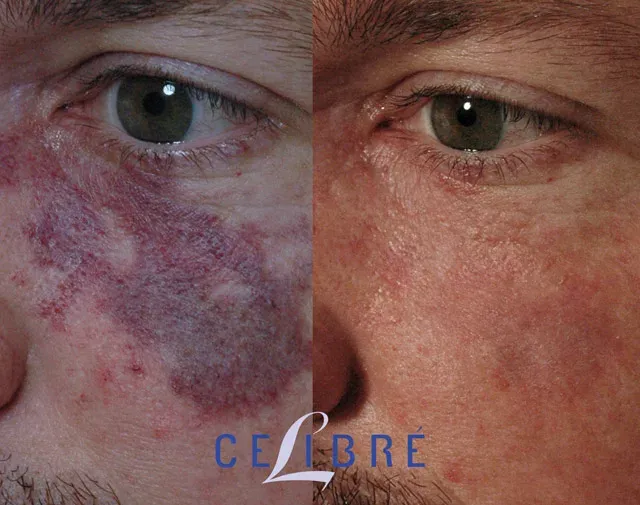
The capillaries in people who have port-wine birthmarks stay in a state of permanent expansion. The skin shows a distinct area of color change, which can display as pink, red, maroon, or purple shades.
Port wine marks continue to exist throughout life, unlike other birthmarks, which vanish with time while their surface characteristics change during aging.
Other Names for a Port Wine Stain
You may hear this condition referred to by several names, including:
- Port wine stain birthmark
- Port-wine stain
- Port wine birthmark
- Wine stain birthmark
- Port stain birthmark
- Port wine mark
Although the terminology varies, these terms all describe the same vascular condition.
What Causes a Port Wine Stain?
Parents want to know what produces port wine stain birthmarks and if any pregnancy factors led to their development.
The answer is reassuring: a port wine stain is not caused by anything a parent did or did not do during pregnancy.
A port wine stain develops during fetal growth because of abnormal blood vessel formation. The condition appears to result from nerve problems which affect the control of capillary vessels so they cannot achieve their normal constriction pattern.
The skin shows its unique color pattern because blood gathers within these blood vessels.
A port wine birthmark is:
- Present at birth
- Non-contagious
- Not hereditary in most cases
- Usually permanent without treatment
Understanding this can help ease anxiety for parents who may mistakenly blame themselves.
Where Do Port Wine Stains Commonly Appear?
A port wine stain birthmark can appear anywhere on the body, but certain areas are more common.
The most frequent locations include:
- Face
- Neck
- Forehead
- Eyelids
- Cheeks
- Scalp
- Arms and legs
The emotional impact of facial port wine stains reaches its highest point because these marks become very obvious to others.
Healthcare providers need to perform extra assessments for Sturge-Weber syndrome and glaucoma when port-wine stains develop on the forehead and around the eye region.
Medical professionals need to perform early assessments because this approach lets them track patients correctly while patients get peace of mind through proper monitoring.
How a Port Wine Stain Changes Over Time
One important fact about a port wine stain is that it is progressive.
This means the birthmark can evolve over time if left untreated.
During Infancy
In babies, a port wine birthmark is usually:
- Flat in texture
- Light pink or red
- Smooth to the touch
At this stage, many parents may mistake it for a temporary mark that will fade.
During Childhood and Adulthood
As a person ages, untreated port wine stains may:
- Darken to deep red or purple
- Become raised or thicker
- Develop a bumpy or cobblestone texture
- Grow proportionally with the body
- Lead to soft tissue thickening or facial asymmetry
Because of these progressive changes, many specialists recommend early intervention.
Emotional Effects of a Port Wine Birthmark
The impact of a wine stain birthmark goes beyond appearance.
Children, teenagers, and adults with visible birthmarks especially on the face may experience emotional or social challenges.
Some people report:
- Lower self-confidence
- Social anxiety
- Feelings of self-consciousness
- Emotional distress related to appearance
This emotional aspect matters.
Research and clinical experience suggest that early treatment may improve not only cosmetic outcomes but also emotional well-being and confidence.
A supportive, compassionate treatment plan can make a meaningful difference.
Best Treatment for Port Wine Stain Birthmark
The most widely recognized treatment for a port wine stain is Pulsed Dye Laser (PDL) therapy.
Today, it remains the gold-standard treatment option recommended by many vascular birthmark specialists.
Pulsed Dye Laser for Port Wine Stains
Pulsed Dye Laser treatment uses a specific wavelength of light typically between 585 and 595 nanometers to target abnormal blood vessels under the skin.
The laser energy is absorbed by oxyhemoglobin in the blood vessels, helping break down abnormal capillaries while minimizing damage to surrounding skin.
Because the laser selectively targets blood vessels, it is considered safe and highly precise.
Why Pulsed Dye Laser Is Effective
Pulsed Dye Laser treatment is often recommended because it can:
- Lighten a port wine stain birthmark significantly
- Reduce future darkening and thickening
- Treat infants, children, and adults safely
- Improve overall skin appearance
- Help maintain smoother skin texture over time
Many patients notice gradual improvement after several sessions.
Results vary, but earlier treatment often leads to better outcomes.
What to Expect During Port Wine Stain Treatment
Treating a port wine stain birthmark usually requires multiple laser sessions.
The exact number depends on several factors, including:
- Size of the birthmark
- Skin tone
- Blood vessel depth
- Age of the patient
- Location of the port wine stain
Many patients undergo between 6 and 12 treatment sessions, spaced several weeks apart.
Temporary side effects are usually mild and may include:
- Redness
- Mild swelling
- Bruising
- Temporary skin sensitivity
These effects generally resolve within a few days.
A consultation with an experienced laser specialist can help set realistic expectations.
When Should You Treat a Port Wine Stain?
Experts often recommend treating a port wine stain early in life whenever possible.
Starting laser therapy during infancy or early childhood may offer several benefits:
- Better lightening results
- Less skin thickening later in life
- Reduced risk of texture changes
- Improved long-term cosmetic outcomes
Younger port wine stains tend to respond better because blood vessels are smaller and less deeply established.
However, adults can still benefit from treatment and often see noticeable improvement.
Can a Port Wine Stain Be Removed Completely?
One of the most common questions patients ask is whether a port wine stain birthmark can disappear completely.
The answer depends on several factors.
Some port wine stains fade dramatically with laser treatment, while others improve only partially.
Results often depend on:
- Birthmark location
- Skin type
- Severity of discoloration
- Age at treatment
- Consistency of sessions
Although complete removal is not always possible, modern laser technology can significantly reduce the appearance of a port wine mark, helping patients feel more confident and comfortable in their skin.
Final Thoughts on Port Wine Stains
A port wine stain exists as a permanent vascular birthmark which develops into different shades and densities and surface appearances throughout its lifespan.
The birthmark usually does not cause medical problems for most people but doctors need to identify and treat it quickly when it appears on visible body areas or shows signs of getting worse.
The medical field has achieved better results with laser technology because of its recent technological progress.
You need to see an expert doctor who specializes in port wine stain birthmarks to get the best treatment plan and understand what results you can expect in the long run.
FAQs About Port Wine Stain
1. What is a port wine stain?
A port wine stain develops as a birthmark because the capillaries under the skin stay permanently expanded which creates this vascular condition. The birthmark shows up as a red or pink or purple area which people have since their birth.
2. Do port wine stains go away naturally?
No. Unlike some birthmarks, a port wine stain birthmark usually does not fade on its own and may become darker or thicker with age.
3. What is the best treatment for a port wine stain?
Doctors consider Pulsed Dye Laser (PDL) as the best treatment option for port wine stains because it targets abnormal blood vessels safely.
4. Is a port wine stain dangerous?
Most port wine stains are harmless. Medical assessment becomes necessary for birthmarks which appear on the eyes or forehead because doctors need to check for possible related medical conditions.
5. Can adults treat a port wine stain?
Yes. Although early treatment often produces better outcomes, adults can still benefit from laser therapy and experience noticeable fading.