
Most people fail to identify sebaceous hyperplasia as a medical term, but they would identify its appearance when they see it in person. People tend to confuse these skin bumps with regular pimples or acne, yet they stem from a separate medical issue.
What Is Sebaceous Hyperplasia?
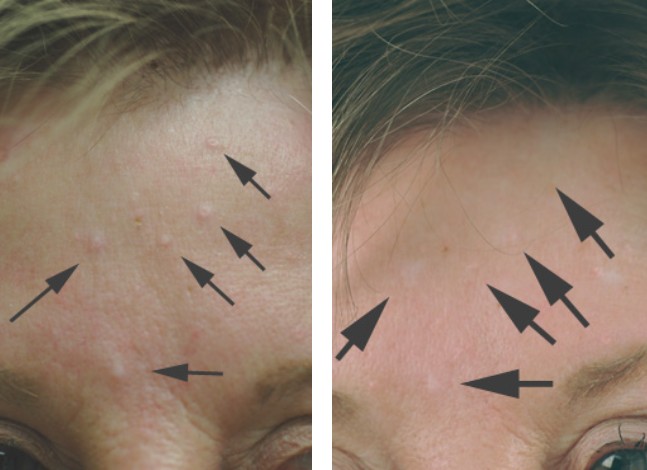
Sebaceous hyperplasia causes patients to develop permanent white or skin-colored bumps that range from small to medium size and do not disappear without treatment. These skin growths develop on facial sections that contain the highest number of oil-producing glands, including the forehead, nose, inner cheeks, and chin. These skin bumps differ from acne because they develop without any bacterial infection or blocked skin pores. The oil glands have expanded until they show through the skin surface because they have exceeded their normal size.
What Causes Sebaceous Hyperplasia?
The main reasons for sebaceous hyperplasia are the aging process and inherited genetic factors. The majority of individuals start showing these signs during their 30s and 40s, but scientists have yet to find any methods for stopping their development. The skin surface becomes visible when sebaceous glands grow larger than their usual dimensions during the aging process. People with naturally oilier skin tend to be more susceptible, as their oil glands are already more active.
How to Recognize Sebaceous Hyperplasia on the Face
The facial surface develops sebaceous hyperplasia, which shows as tiny bumps that feature a central pit and exhibit a pale yellow or natural skin tone. The skin surface shows these bumps as the main symptom, which allows doctors to identify them from milia and whiteheads. They are usually 2–5 mm in diameter and have a soft, slightly waxy texture. These skin lesions tend to develop most frequently on the forehead and nose, as well as the inner cheeks and chin area.
Treatment for Sebaceous Hyperplasia: Your Best Options
There are two main treatment options available today.
Hyfrecator (Cauterization) A hyfrecator uses low-power electrical current to cauterize the enlarged oil glands. The method works as a proven standard technique for treating single lesions. The treatment provides a temporary solution because it prevents bumps from becoming raised for several months after patients complete their treatment.
ALA-PDT (Photodynamic Therapy) Most Effective. The current best method for treating sebaceous hyperplasia involves using light-sensitizing drugs, which patients need to take before they receive specific light treatment. This process is known as ALA-PDT. The medicine ALA or aminolevulinic acid is heavily absorbed by the oil glands. The skin absorbs light, which directs its power to these glands, which then reduce their size until they completely vanish. Patients with acne or oily skin often see improvement in those conditions as well.
How to Get Rid of Sebaceous Hyperplasia with ALA-PDT
ALA-PDT provides a safe treatment option that works for all skin types and colors, so everybody can receive this therapy. Celibre Medical recommends patients undergo three treatment sessions, which should occur between two and four weeks apart for optimal sebaceous hyperplasia lesion clearance.
The FDA has not given ALA-PDT approval for treating sebaceous hyperplasia, but this method proves to be both safe and effective for this condition. The research base, which proves its safety and effectiveness, keeps growing, so we offer this treatment as the top available choice today.
Frequently Asked Questions
Can sebaceous hyperplasia go away on its own?
No. Unlike acne, sebaceous hyperplasia does not resolve without treatment. The enlarged glands remain visible until treated by a medical professional.
Is sebaceous hyperplasia the same as acne?
No. Acne is caused by clogged pores and bacteria. Sebaceous hyperplasia is caused by enlarged oil glands becoming visible beneath the skin; no infection is involved.
How to treat sebaceous hyperplasia at home?
There is no proven at-home treatment that reliably eliminates sebaceous hyperplasia. Professional medical treatment is required to reduce or remove existing lesions.