
Acne can be frustrating, especially when over-the-counter products or prescription medications fail to deliver the results you’re hoping for. While topical creams and oral medications remain important tools for many patients, light-based therapies can also play a valuable role in a comprehensive acne treatment plan.
One such option is blue light acne treatment a non-invasive therapy that uses a specific wavelength of visible light to target acne-related bacteria on the skin. Blue light therapy may be used on its own in select cases, or as part of a broader treatment strategy.
At Celibre Medical, light and laser technologies are incorporated into customized treatment programs based on each patient’s skin type, acne severity, treatment history, and personal goals.
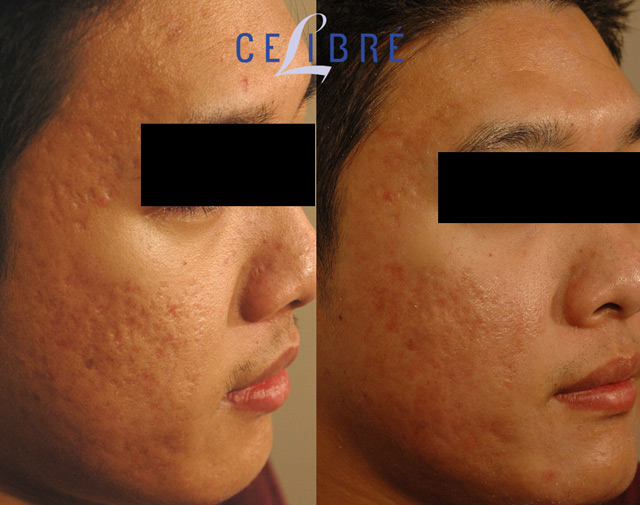
What Is Blue Light Acne Treatment?
Blue light acne treatment is a light-based procedure designed to help manage acne. Unlike laser treatments, blue light therapy typically relies on an LED or similar non-laser light source to deliver targeted blue wavelengths to the skin.
A well-known example is the BLU-U® Blue Light Photodynamic Therapy Illuminator. During treatment, acne-prone skin is exposed to controlled blue light for a specified period of time.
Blue light is especially useful in acne care because the bacteria associated with acne including Cutibacterium acnes (formerly known as Propionibacterium acnes) contain naturally occurring compounds called porphyrins. When these compounds absorb certain wavelengths of blue light, a reaction occurs that can damage the bacteria.
By reducing acne-related bacteria, blue light treatment may help decrease inflammatory acne lesions in some patients.
How Does Blue Light Acne Treatment Work?
Blue light therapy works differently than most topical acne products.
Many acne medications act by unclogging pores, controlling oil production, reducing inflammation, or targeting bacteria directly. Blue light, by contrast, delivers light energy to the skin that interacts with porphyrins produced by acne-causing bacteria. This interaction generates reactive molecules capable of damaging the bacteria, which may in turn improve inflammatory acne and reduce the development of certain lesions.
Because acne can stem from several contributing factors excess oil, clogged pores, bacteria, hormonal fluctuations, and inflammation blue light therapy may not address every underlying cause. For that reason, it’s often most effective as part of a personalized acne treatment program rather than as a stand-alone solution.
What Is BLU-U Acne Treatment?
BLU-U is a medical-grade blue light device used in dermatology. It emits a controlled wavelength of blue light without relying on laser energy.
During treatment, the affected area is positioned in front of the light source. The procedure involves no needles and no incisions.
Treatment schedules vary depending on the individual’s acne presentation, skin condition, and whether blue light is being used alone or in combination with other therapies. One key advantage of light-based acne treatment is that it offers an additional option for patients who haven’t achieved adequate results with conventional products alone.
Blue Light Therapy and Photodynamic Therapy for Acne
For more persistent or difficult acne cases, blue light may be combined with a photosensitizing medication as part of photodynamic therapy (PDT).
At Celibre Medical, LED-based light technology may be paired with aminolevulinic acid (ALA) for appropriate candidates. ALA is a photosensitizing agent applied to the treatment area prior to light exposure, making targeted skin structures more responsive to the light. Once activated, this photodynamic process can affect acne-related bacteria and sebaceous glands, potentially reducing inflammatory acne.
PDT differs meaningfully from blue light therapy performed without a photosensitizing agent. It can involve more pronounced redness, peeling, and skin sensitivity, along with specific post-treatment precautions. Patients undergoing PDT should closely follow their provider’s aftercare instructions, particularly regarding sun and bright-light exposure.
What Types of Acne Can Blue Light Treat?
Blue light acne treatment is generally best suited for inflammatory acne think red pimples and pustules given its targeted effect on acne-causing bacteria.
It tends to be less effective as a stand-alone treatment for non-inflammatory acne, such as blackheads and whiteheads, and severe nodular or cystic acne may require additional therapies altogether.
This distinction matters, since not all acne behaves the same way. A treatment that works well for one patient may offer only limited benefit to another. Before recommending blue light therapy, an experienced provider should evaluate the type and severity of acne, prior treatments, current skincare routine, medications, and other relevant factors.
Benefits of Blue Light Acne Treatment
Blue light therapy offers several qualities that make it appealing for certain patients:
- It’s non-invasive, requiring no injections or surgical incisions.
- It can be incorporated alongside topical skincare products, prescription medications, or other procedures.
- It doesn’t function like an antibiotic, making it a useful option for providers looking to reduce reliance on antibiotic-based acne treatment.
That said, results vary from patient to patient. Multiple sessions are often necessary, and ongoing maintenance or complementary treatments may be recommended depending on how the skin responds.
Is Blue Light Acne Treatment Safe for All Skin Types?
Because blue light therapy is non-ablative and doesn’t remove the skin’s surface, it can potentially be used across a wide range of skin types.
That doesn’t mean every light-based acne procedure is automatically appropriate for every patient, however. Skin tone, photosensitivity, current medications, medical history, and the use of photosensitizing agents all factor into candidacy. Photodynamic therapy using ALA, in particular, requires careful patient selection and diligent aftercare.
At Celibre Medical, treatment recommendations are made only after evaluating each patient’s individual skin characteristics and acne history not by applying a one-size-fits-all protocol.
What Should You Expect During Treatment?
The treatment experience depends on whether you’re receiving blue light therapy alone or full photodynamic therapy.
With blue light treatment alone, the skin is simply exposed to the light source for a set period, and patients may notice warmth or mild, temporary skin changes. Photodynamic therapy is more involved, since a photosensitizing medication is applied before light exposure. Depending on the specific protocol, patients may experience redness, sensitivity, peeling, or a sunburn-like reaction afterward.
Following recommended aftercare is especially important following PDT. Your provider should clearly explain which products to use, what to avoid, and how to protect treated skin while it heals.
How Many Blue Light Acne Treatments Are Needed?
There’s no universal treatment schedule that works for every patient. The number of sessions required depends on factors like acne severity, lesion type, prior treatments, whether PDT is part of the plan, and how the skin responds over time.
Some patients need a series of treatments rather than a single session, and because acne is often a chronic condition, maintaining results may require an ongoing skincare or treatment regimen. A consultation is the best way to determine whether blue light therapy is right for your specific case.
Blue Light Treatment vs. Laser Acne Treatment
Blue light therapy and laser therapy are not interchangeable.
Blue light devices use specific wavelengths of visible light, while medical lasers generate concentrated light energy that targets different tissue structures. Depending on the device used, lasers may address active acne, redness, pigmentation, or acne scarring.
It’s also important to distinguish between active acne treatment and acne scar treatment. Blue light therapy is designed primarily to help control active breakouts not to remove existing scars. Patients dealing with both active acne and scarring may benefit from a staged approach: controlling breakouts first, then addressing remaining scars with appropriate procedures.
Is Blue Light Therapy Right for Your Acne?
Blue light acne treatment can be a valuable option for patients whose conventional treatments haven’t produced adequate results, or for those looking to complement an existing acne regimen.
The right treatment ultimately depends on what’s driving your breakouts. A professional evaluation can help determine whether blue light alone, photodynamic therapy, prescription products, laser procedures, or some combination of these approaches is the best fit.
At Celibre Medical, we take an individualized approach to acne treatment, using established light and laser technologies when they’re appropriate for a patient’s specific condition. Our goal is to help control active acne while supporting long-term skin health and minimizing the risk of lingering discoloration or scarring.
If persistent acne hasn’t responded to your current routine, scheduling a consultation can help you determine whether blue light acne treatment or another medical acne therapy is the right next step for you.