
You’ve grown a human being. Your body has stretched, shifted, and transformed in ways you never imagined and now you’re on the other side of it, holding your baby and wondering what comes next for you.
Stretch marks are one of the most common postpartum concerns new moms face. And if you’re currently breastfeeding, you may already be asking: can I get laser treatment for stretch marks while breastfeeding?
The short answer is: not yet but understanding why will help you plan ahead and get the best possible results when the time is right.
Why Breastfeeding Stretch Marks Are So Common
Stretch marks form when the skin is pulled faster than it can adapt. During pregnancy, your belly, breasts, hips, and thighs expand rapidly and the deeper layers of skin simply can’t keep pace.
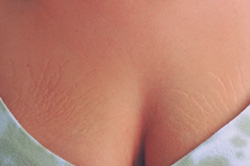
But it’s not just about stretching. Hormonal changes during pregnancy and nursing play a major role too. Elevated levels of hormones like cortisol weaken the elastic fibers in the skin, making stretch marks more likely to form regardless of how much weight you gain. Some women are also genetically predisposed, which means no cream or prevention strategy can fully guarantee you’ll avoid them.
Stretch marks on the breasts during breastfeeding are especially common, as breast tissue continues to change with milk production. These marks may appear pinkish-red at first and gradually fade to a silvery-white over time but many women want to explore treatment options to speed up that process.
Is Laser Treatment Safe During Breastfeeding?
This is one of the most frequently asked questions we hear, and the honest answer is: laser treatment while breastfeeding is not recommended.
Here’s why.
When your body is still under the influence of postpartum and nursing hormones, your skin behaves unpredictably. Lasers interact with skin tissue in precise ways but hormonal fluctuations can throw off that predictability. Some women experience little to no response to treatment during this period. Others may have a heightened or hypersensitive reaction that can actually worsen the appearance of stretch marks.
Simply put, laser treatment for stretch marks after pregnancy works best when your hormones have stabilized and that typically means waiting until you’ve finished breastfeeding.
Why We Recommend Waiting Until After You’re Done Nursing
At Celibre Medical, we take a long-view approach to your care. Recommending a treatment before your body is ready isn’t just ineffective it can be counterproductive and, in some cases, harmful.
There are a few key reasons we advise waiting:
Hormonal instability affects laser outcomes. Nursing keeps your body in a state of hormonal flux. Until those levels return to your pre-pregnancy baseline, your skin’s response to laser energy is harder to predict and control.
Stretch marks can return in future pregnancies. If you’re planning to have more children, treating stretch marks now may only be a temporary fix. We always have this honest conversation with our patients so they can make informed decisions about timing.
Your safety is the priority. A safe, effective laser treatment for postpartum stretch marks means working with your body not against it. Waiting a little longer sets you up for significantly better results.
What Makes a Stretch Mark Treatment Safe and Effective?
Once you’ve finished nursing and your hormones have stabilized, laser treatments can be remarkably effective at reducing the appearance of stretch marks. But not all treatments are equal, and the best approach depends on factors like:
- The age of the stretch marks (newer, red/pink marks often respond better than older, white ones)
- Skin tone and type
- The location and depth of the marks
Laser treatments for stretch marks after pregnancy typically work by stimulating collagen production and remodeling the skin’s texture. Multiple sessions are usually needed, and results build gradually over time. Many patients see meaningful improvement in both color and texture.
What You Can Do Right Now While Breastfeeding
Just because laser treatment isn’t an option yet doesn’t mean you’re without options. While no topical treatment will eliminate stretch marks, a few approaches may help support your skin during this time:
- Moisturizing consistently with products containing shea butter, hyaluronic acid, or canella asiatica can help improve skin elasticity and comfort.
- Staying hydrated supports overall skin health from the inside out.
- Gentle massage of affected areas may improve circulation and keep the skin supple.
It’s also worth noting that stretch marks naturally fade on their own over 12–18 months postpartum. By the time you’re ready for laser treatment, your marks may already have lightened significantly which can actually improve your treatment outcomes.
Planning Your Laser Treatment for Postpartum Stretch Marks
When you’re ready, here’s what to expect from the consultation and treatment process:
A thorough skin assessment comes first. Your provider will evaluate the age, location, and severity of your stretch marks and recommend the most appropriate laser or energy-based technology for your skin type.
Treatment is typically spread over several sessions, spaced weeks apart to allow for healing and collagen remodeling. Results are gradual and that’s a good thing. The skin is rebuilding itself from the inside, and that takes time.
The best candidates for laser stretch mark removal are those who have completed breastfeeding, have stable hormone levels, and have realistic expectations about the degree of improvement possible.
Frequently Asked Questions About Breastfeeding Stretch Marks and Laser Treatment
1. Can I get laser treatment while breastfeeding?
No. Laser treatments for stretch marks are not recommended during breastfeeding. Hormonal fluctuations during nursing can cause unpredictable skin responses to laser energy, potentially leading to poor results or skin irritation. It’s best to wait until you’ve fully finished nursing and your hormones have stabilized.
2. Is laser treatment for stretch marks after pregnancy effective?
Yes, laser treatment for postpartum stretch marks can be highly effective, especially when performed after breastfeeding ends. Treatments stimulate collagen production and improve skin texture over several sessions. Newer, reddish stretch marks tend to respond better than older, white ones.
3. Why do I get stretch marks on my breasts during breastfeeding?
Breast tissue expands significantly during pregnancy and continues to change throughout the nursing period due to milk production. This rapid change stretches the skin, and combined with hormonal effects on skin elasticity, can cause stretch marks on the breasts during breastfeeding.
4. How long should I wait after breastfeeding before getting laser treatment?
Most providers recommend waiting until your menstrual cycle has returned and stabilized, which is a signal that your hormones are returning to baseline. In practice, this often means waiting at least 2–3 months after fully weaning. Your provider will assess your individual situation during a consultation.
5. Will stretch marks come back after laser treatment?
Treated stretch marks generally do not return in the same location. However, if you become pregnant again, new stretch marks can develop. This is why we recommend completing your family planning before investing in a full course of laser treatments so your results last.