
Brown stretch marks represent the typical skin problem that people experience, yet many individuals do not understand their nature. People develop stretch marks at different times, including pregnancy and weight changes, and growth periods, but they want to know the following: What causes my stretch marks to become brown? Do dark stretch marks show different characteristics than red or white stretch marks? What treatments lead to successful results?
The medical team at Celibre Medical has assisted multiple patients through their process of stretch mark identification and treatment, which works for all skin types and colors. Here’s what you need to know.
Why Are My Stretch Marks Brown?
Stretch marks, which doctors call striae distensile, develop when the skin expands at a rate that exceeds its ability to stretch naturally. The surface fibers, which consist of collagen and elastin, break under this pressure, producing the visible marks we identify.
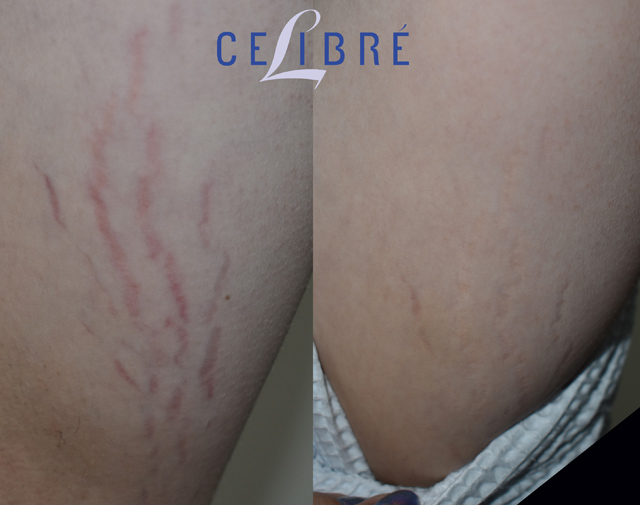
Your skin tone largely determines the color of your stretch marks. Stretch marks on skin tones between medium and dark show up as brown or dark brown marks instead of the pink or red colors that appear on lighter skin. The skin develops this condition because melanin pigment stores increase in the healing tissue, which causes the affected area to become darker.
So if you’ve been asking yourself, “Why are my stretch marks dark?” or Why are my stretch marks so dark compared to my skin? Your melanin levels are usually the explanation. The condition does not point to any medical problems that require immediate treatment.
What Do Brown Stretch Marks Mean for Your Skin?
The color of a stretch mark tells us something important about its stage and how it should be treated. Here’s a quick breakdown:
- The fresh marks which appear as red or purple stretch marks contain active blood vessels that run right beneath the skin surface. Most common on lighter skin.
- The skin exhibits brown or dark brown stretch marks which appear naturally on people who have medium to deep skin tones. The brown color in the skin shows pigmentation instead of showing signs of active inflammation. The marks seem to have been on the skin for a while because they appear older.
- White or silvery stretch marks: Mature marks that have lost pigment. The treatment of these marks becomes impossible to handle when patients have any skin color.
The brown color which appears on stretch marks becomes darker when the skin shows typical development of striae during its natural course of change on darker skin tones.
Stretch Marks on Dark Skin: What’s Different?
Skin with darker tones shows different stretch mark patterns than lighter skin types, which need separate treatment methods.
Stretch marks develop as dark lines that appear as almost black marks on brown and Black skin tones. The skin condition does not follow the standard red-to-white change because it stays within the brown-to-dark color range. The body produces identical scar tissue, but melanin molecules generate different responses when they encounter skin damage.
Medical care needs to consider skin color because not all skin types respond to lasers and other devices in the same way. The wrong technology application on darker skin types produces post-inflammatory hyperpigmentation, which creates two different outcomes: the marks become more visible before fading, and new dark spots develop on the skin.
Are Stretch Marks Scars? The Short Answer Is Yes
Yes, stretch marks are a form of scar. The skin’s deeper layer, which provides structural support and elasticity, undergoes permanent alterations that result in these marks. The body forms scars that follow the same pattern as these marks because they fail to vanish completely without any treatment.
That said, “permanent” doesn’t mean “untreatable.” The right treatment method will help you change the look of brown stretch marks because it works to improve both their color and their surface appearance.
Do Creams Actually Lighten Stretch Marks?
People continue to ask this question, as the correct response shows that no permanent change occurs. Products that include cocoa butter and shea butter, such as Palmer’s Cocoa Butter, serve as common stretch mark treatments, but they only provide skin hydration and brief skin surface enhancement without affecting the actual scar tissue beneath.
The treatment of early red stretch marks shows promise through Tretinoin (a retinoid), but this therapy fails to produce substantial results when it comes to treating dark brown or mature marks. Topical creams fail to reach deep enough into the skin to produce collagen reconstruction or melanin reduction in the dermis.
People who want to remove their stretch marks and dark marks should choose clinical laser treatment because it represents the most effective treatment option, which science supports.
Laser Treatment for Dark Brown Stretch Marks: What Works
At Celibre Medical, we take a combination approach to treating brown and dark stretch marks because no single laser addresses all the factors involved.
Q-Switched Laser for Dark Pigmentation
The laser targets excess melanin which makes it highly effective for treating dark brown stretch marks that appear after skin inflammation. The process destroys pigment spots while it safeguards all tissue outside of the affected area.
Pulsed Dye Laser for Redness and Active Marks
The Pulsed Dye Laser eliminates blood vessels which cause red and purple tones in your brown marks during their early inflammation stage to reduce skin redness while soothing the affected area.
Collagen-Stimulating Laser for Texture and Tone
Our treatment approach for aging scars uses heat-based lasers such as the Aramis Quantel to promote collagen synthesis which addresses their color and surface irregularities. The treatment process eliminates stretch mark scars which appear as raised or depressed tissue to produce an improved skin texture.
Our nurses customize settings based on your specific skin tone, stretch mark color, age of the marks, and treatment area. The treatments operate without causing any downtime which lets you resume your daily activities during the same day.
What Results Can You Realistically Expect?
We believe in honest conversations. Stretch marks including dark brown ones will not vanish completely. But with consistent laser treatment, most patients see meaningful improvement in:
- Color: Dark brown marks become lighter and closer to your natural skin tone.
- Texture: Indented or raised areas become smoother.
- Visibility: Marks become significantly less noticeable especially in motion or under clothes.
Timing matters, too. The sooner you begin treatment, the better. Fresh brown stretch marks respond more readily than mature, white ones. Early treatment can interrupt pigmentation and inflammation before they become fully established.
Who Should Avoid Laser Treatment?
Laser treatment isn’t the right fit for everyone. We recommend postponing or reconsidering if you:
- Are still experiencing active weight changes or growth (the stretch marks may continue to form).
- Are pregnant.
- Have significant skin laxity and would benefit more from surgical options like a tummy tuck.
Frequently Asked Questions About Brown Stretch Marks
Why are my stretch marks brown instead of red or white?
The color of stretch marks is primarily determined by your skin tone and the amount of melanin in your skin. People with medium to deeper complexions tend to develop brown or dark brown stretch marks because their skin produces more melanin in response to the tearing of collagen fibers. Red or pink marks are more common in lighter skin tones, while white or silvery marks occur in older, more mature stretch marks across all skin types.
Can dark brown stretch marks be treated with laser?
Yes, but it requires the right laser for your skin tone. Q-switched lasers are particularly effective at targeting the melanin deposits that cause dark coloration. At Celibre Medical, we combine multiple laser technologies to address both color and texture, and all our treatments are safe across all skin types, including dark and brown skin tones.
Do brown stretch marks go away on their own?
Stretch marks are a permanent form of scarring and don’t fully disappear without treatment. Over time, they may fade slightly in color sometimes shifting toward white or silver but the texture change in the skin remains. Clinical laser treatment is the most effective way to meaningfully reduce both the color and texture of brown stretch marks.
What does it mean if my stretch marks are getting darker?
Stretch marks turning darker or going from brown to nearly black is often a natural response of melanin-rich skin. It can also occur with sun exposure, hormonal changes, or during and after pregnancy. It’s rarely a medical concern, but it is worth treating early, since darker, more pigmented marks respond better to laser therapy than fully matured white marks.
How do I know if I’m a good candidate for stretch mark treatment?
Most people with brown or dark stretch marks are good candidates for laser treatment at Celibre Medical including those with darker skin tones. The main factors that affect candidacy are whether you’re still in an active growth or weight-change phase, whether you have realistic expectations, and whether your concerns are cosmetic or require a surgical approach. A consultation with one of our nurses is the best way to know for sure.
Brown stretch marks are incredibly common and completely normal. They don’t define you, but if they’re bothering you, there are real, effective options available. At Celibre Medical, we combine clinical expertise with honest expectations to help you achieve the best possible results for your skin.