
Many people who once loved their body art eventually look for ways to remove it. Thanks to modern technology, laser tattoo removal has become the most effective and popular method for fading or completely removing unwanted tattoos. But many still wonder, how do lasers remove tattoos and what actually happens during the tattoo removal process.
This article explains the science, steps, and expectations behind laser tattoo removal so you can understand how the treatment works.
What Is Laser Tattoo Removal?
Laser tattoo removal is a non-surgical tattoo removal treatment that uses concentrated laser energy to break down tattoo ink in the skin. The laser treatment targets the pigment without damaging the surrounding tissue, making it a safe and effective solution.
Over multiple removal sessions, the body’s immune system gradually clears away the tiny pigment particles, leading to visible tattoo fading.
How Do Lasers Remove Tattoos?
To understand how lasers remove, it helps to know how tattoos are placed in the skin. When a tattoo is applied, the tattoo ink is injected into the deeper layers of the skin, where it becomes trapped in the tissue.
During a laser tattoo removal procedure, the device sends laser energy pulses into the skin. These pulses are absorbed by the pigment particles in the tattoo ink. The energy causes the ink to shatter into smaller fragments, a process known as pigment particle breakdown.
Once the ink is broken down, the body’s immune system begins the skin healing process. Over time, the lymphatic system removes the fragmented ink, resulting in gradual ink breakdown and tattoo clearance.
This is why multiple removal sessions are usually required for effective tattoo removal results.
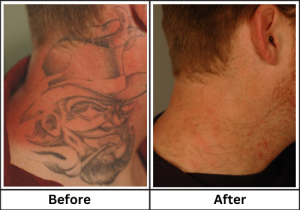
Step-by-Step Laser Tattoo Removal Process
Here is a simple explanation of the tattoo removal process from start to finish.
1. Initial Consultation
Before starting laser treatment sessions, a professional at a dermatology clinic will evaluate your tattoo. They consider factors such as ink color, size, depth, and skin type.
This tattoo consultation helps determine the number of removal sessions needed.
2. Laser Application
During the laser removal procedure, the specialist uses advanced laser technology to deliver short laser pulses into the tattooed area.
The laser energy specifically targets the tattoo ink, leaving the surrounding skin mostly unaffected. This is the core of laser ink breakdown.
3. Ink Fragmentation
The laser energy pulses shatter the ink into smaller pigment particles. This step is known as pigment particle breakdown.
4. Body’s Natural Clearance
After the laser procedure, the body begins the skin healing process. The immune system gradually removes the fragmented ink, leading to gradual ink fading.
5. Repeated Sessions
Because each laser treatment only breaks down a portion of the ink, multiple removal sessions are necessary for complete tattoo removal or significant fading.
How Many Sessions Are Needed?
The number of removal sessions depends on several factors:
- Size of the tattoo
- Ink colors used
- Depth of the tattoo ink
- Age of the tattoo
- Skin type and skin response
Most people require between 6 and 12 laser treatment sessions for effective tattoo removal results. Each session is spaced several weeks apart to allow proper skin recovery.
Does Laser Tattoo Removal Hurt?
Many people worry about discomfort during laser tattoo removal. The sensation is often compared to a rubber band snapping against the skin.
To improve comfort during the laser procedure, clinics may use:
- Cooling devices
- Topical numbing creams
- Advanced laser technology with shorter pulses
Although some discomfort is expected, modern laser therapy makes the process much more manageable than older methods.
What Happens After Each Session?
After each laser treatment session, the skin begins the healing process. You may notice:
- Redness
- Swelling
- Mild blistering
- Temporary darkening or lightening of the skin
Following proper aftercare instructions is essential for good removal results and to prevent complications.
Basic aftercare tips include:
- Keep the area clean and dry
- Avoid sun exposure
- Use recommended ointments
- Do not pick at scabs or blisters
- Follow clinic-provided aftercare instructions
Good skin protection helps speed up skin recovery and improves tattoo clearance.
Types of Lasers Used in Tattoo Removal
Modern tattoo removal technology uses specialized lasers designed to target different ink colors.
Common types include:
- Q-switched lasers
- Picosecond lasers
- Nd:YAG lasers
These devices use precise laser energy pulses to achieve effective ink breakdown while minimizing damage to surrounding skin.
Advanced modern laser technology allows for safer and more efficient non surgical removal.
Can All Tattoos Be Removed?
While laser tattoo removal is very effective, results vary. Some tattoos are easier to remove than others.
Easier tattoos to remove:
- Older tattoos
- Black or dark ink
- Professional tattoos with consistent ink
More difficult tattoos:
- Bright colors like green or yellow
- Very deep tattoo ink
- Cover-up tattoos
Even if complete removal isn’t possible, most people achieve significant tattoo fading sessions that make the tattoo barely noticeable.
Are There Any Risks?
Laser tattoo removal is generally safe when performed by trained professionals. However, like any skin treatment, there are potential risks.
Possible side effects include:
- Temporary redness or swelling
- Minor scarring
- Changes in skin pigmentation
- Infection if aftercare is ignored
Choosing a reputable dermatology clinic and following aftercare instructions greatly reduces these risks.
Benefits of Laser Tattoo Removal
There are several advantages to choosing laser tattoo removal over other methods.
Key benefits:
- Non surgical removal
- Minimal damage to surrounding skin
- Effective tattoo fading
- Safe for most skin types
- Gradual, natural-looking results
With advanced laser skin treatment, many people achieve effective tattoo removal without major complications.
Who Is a Good Candidate?
You may be a good candidate for laser tattoo removal if you:
- Have an unwanted tattoo
- Are in good overall health
- Have realistic expectations
- Can commit to multiple removal sessions
- Are willing to follow proper aftercare instructions
A professional tattoo consultation will determine the best laser treatment plan for your needs.
Conclusion
So, how do lasers remove tattoos? The process uses targeted laser energy to break down tattoo ink into tiny pigment particles. These particles are then naturally removed by the body during the skin healing process. Over several laser treatment sessions, this leads to gradual ink breakdown and visible tattoo fading.
Thanks to modern laser technology, laser tattoo removal is now a safe, effective, and widely available tattoo removal treatment. With the right clinic, proper aftercare instructions, and patience through multiple removal sessions, most people can achieve excellent tattoo removal results.