
Have you ever seen a tiny red bump which stays on your skin without any signs of disappearing? You’re not alone. Doctors identify these skin marks as cherry angiomas which rank among the most frequent noncancerous skin growths. The medical community regards them as safe but numerous patients choose to remove their cherry angiomas for aesthetic purposes or to eliminate any worry about their condition.
Our team at Celibre Medical focuses on educating patients about their red mole condition while we offer the best treatment options for achieving skin clarity. This guide provides all essential information about how to recognize and remove cherry angiomas which appear on lips and facial skin and body surface.
What Is a Cherry Angioma?
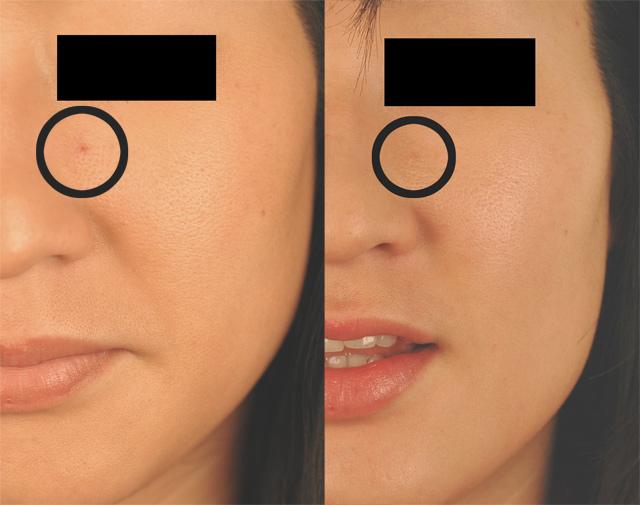
A cherry angioma (sometimes called a senile angioma or cherry hemangioma) is a small, round, bright red or purple bump on the skin. These growths are made up of clusters of tiny blood vessels, or capillaries, that have moved toward the surface.
Common Characteristics
- Color: Typically bright “cherry” red, though a cherry angioma turned black or dark purple can occur if the blood inside clots (thrombosis).
- Texture: They can be flat cherry angiomas or slightly raised and dome-shaped.
- Size: Usually ranging from a pinhead to about a quarter-inch in diameter.
- Behavior: Unlike some skin lesions, do cherry angiomas blanch when pressed? Generally, they do not fade or “blanch” significantly because the blood is contained within permanent vessel structures.
Most people start noticing them in their 30s or 40s, and it is very common to see a sudden appearance of many cherry angiomas as we age.
What Causes Cherry Angiomas?
While the exact “why” is still being studied, several factors are known to trigger these red spots:
- Genetics: If your parents had them, you likely will too.
- Aging: Their prevalence increases significantly after age 30.
- Hormonal Fluctuations: There is a known link between progesterone, cherry angiomas, and estrogen dominance. Many women report they appear during pregnancy or while taking certain medications.
- Climate and UV Exposure: Chronic sun exposure can damage vessel walls, potentially leading to their formation.
A common question we hear is, “Do cherry angiomas go away?” Unfortunately, they rarely disappear on their own. Once the blood vessels have clustered, they typically remain unless professionally treated.
Cherry Angioma vs. Melanoma: Knowing the Difference
It is natural to feel a sense of urgency when you see a new spot, leading many to search for “cherry angioma vs. melanoma.” While cherry angiomas are benign, melanoma is a serious form of skin cancer.
| Feature | Cherry Angioma | Melanoma |
| Color | Uniform bright red, purple, or brown angioma. | Multicolored (black, brown, tan, or blue). |
| Shape | Round, symmetrical, and well-defined. | Irregular borders and asymmetrical shape. |
| Change | Grows very slowly or stays the same. | Changes size, shape, or color rapidly. |
| Symptoms | Usually asymptomatic. | May itch, bleed, or crust over. |
If you notice a cherry angioma turned brown or one with an irregular border, it is essential to have a professional evaluation to rule out cancerous red moles or other malignancies.
Can You Remove Cherry Angiomas at Home?
Many people want to remove their cherry angiomas through home treatments because they make their own skincare products. People often use apple cider vinegar and wart remover for home cherry angioma removal but some attempt to pop these skin growths themselves.
Doctors have advised against patients attempting to remove their growths at home. The blood vessel composition of these growths causes them to bleed excessively when injured. The use of cherry angioma removal pens or freezers available at stores tends to produce the following results:
- The body develops unremovable scars which look worse than the original skin condition.
- The practice of self-surgery through DIY methods results in open wounds which can develop into infections.
- Doctors need to remove the entire angioma because partial removal results in tumor growth after surgery. The angioma will return because doctors fail to identify and remove the blood vessels which support its growth.
Professional Cherry Angioma Removal Options
For those looking for the best way to remove cherry angiomas, professional clinical treatments offer the safest and most aesthetic results.
1. Cauterization (Hyfrecator)
This is our preferred method at Celibre Medical. A tiny probe delivers a precise spark of electricity to the lesion, instantly cauterizing the cherry angioma.
- Pros: Highly precise, usually requires only one treatment, and has minimal risk of scarring.
- Experience: A quick “snap” sensation.
2. Laser Removal
Using specific wavelengths (like IPL or Pulsed Dye Lasers), cherry angioma laser removal targets the hemoglobin in the blood.
- Pros: Great for treating many small spots at once.
- Expectation: The spot may turn dark purple before fading away over 1–2 weeks.
3. Cryotherapy
This involves freezing the growth with liquid nitrogen. While effective, it is less precise than cautery and may cause a temporary blister or a white spot (hypopigmentation).
When to See a Specialist
While most red dots are just a cosmetic nuisance, you should book a consultation if:
- A cherry angioma won’t stop bleeding after being bumped.
- You notice a sudden increase in cherry angiomas over a short period.
- The lesion displays any of the “ABCDE” signs of skin cancer (Asymmetry, Border, Color, Diameter, Evolution).
Frequently Asked Questions (FAQ)
1. Can a cherry angioma turn into cancer?
No. A true cherry angioma is a benign (non-cancerous) overgrowth of blood vessels. It does not have the cellular structure to become melanoma. However, other skin cancers can sometimes look red, which is why a professional diagnosis is key.
2. Why did my cherry angioma turn black?
A cherry angioma turned black is usually “thrombosed.” This means a tiny blood clot has formed inside the vessel cluster. While usually harmless, any spot that changes color significantly should be checked by a professional.
3. Will cherry angiomas grow back after removal?
Once a specific angioma is successfully destroyed by cauterization or laser, that specific spot typically does not return. However, treatment does not prevent your body from forming new angiomas elsewhere as you continue to age.
4. Is removal covered by insurance?
Because removing a cherry angioma is almost always considered a cosmetic procedure rather than a medical necessity, most insurance plans do not cover the cost.
5. Can I prevent new cherry angiomas from forming?
While you can’t change your genetics, you can support your vascular health. Some evidence suggests that managing hormone levels and protecting your skin from extreme sun damage may slow down their appearance.