
Menu
Many men and women struggle with a persistent skin condition that seems impossible to hide. While most of us are diligent about applying sunscreen to our faces, we often forget the neck and chest, which are equally exposed to the harmful effects of UV radiation.
This chronic exposure leads to a condition known as poikiloderma neck, characterized by a complex mix of hyperpigmentation on neck and chest, redness, and a “leathery” skin texture. Understanding the poikiloderma meaning is the first step toward reclaiming clear, healthy skin.
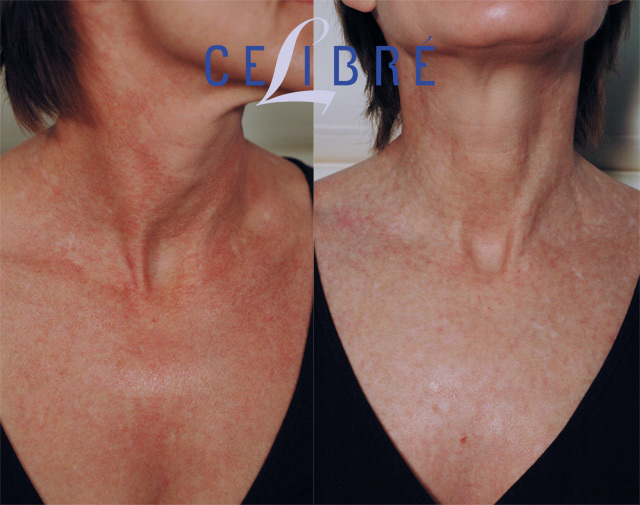
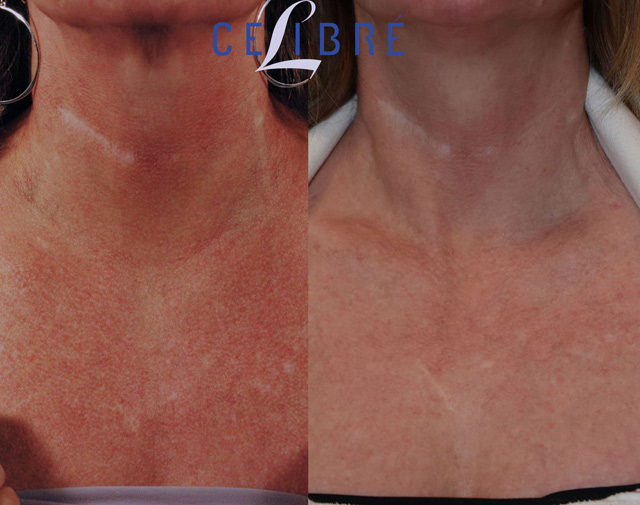
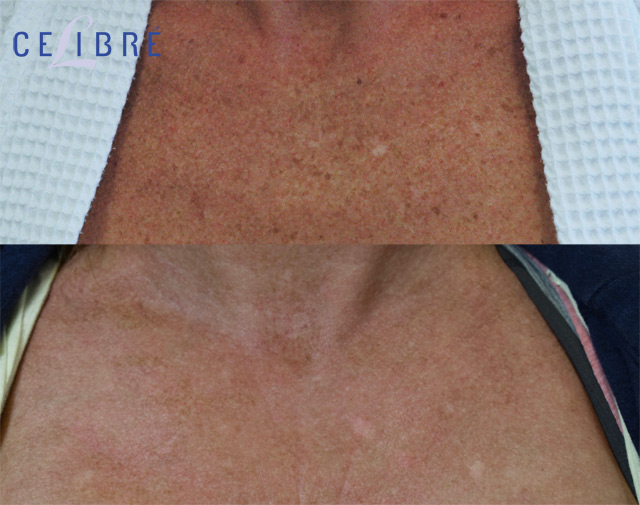
Poikiloderma is often mistaken for temporary irritation. However, a key diagnostic clue is to look at the skin under your chin or beneath your shirt’s neckline. Because these areas are shaded, they often remain pristine, while the surrounding skin shows a clear brown rash on neck surfaces or a distinct chest discoloration.
Patients frequently notice a mottled skin on neck appearance, where the skin looks uneven and weathered. If you observe persistent redness on upper chest areas or visible thinning of the skin, you are likely experiencing poikilodermia. Many individuals search for rosacea on chest pictures to identify their symptoms, but while there is an overlap in skin redness on chest, the pigment changes in this condition are far more complex than standard rosacea.
The primary driver of poikiloderma neck issues is cumulative sun damage. Even everyday activities, like spending hours in a car, contribute to thousands of hours of UV exposure over a lifetime. This leads to significant sun damage on chest areas, where UV rays break down collagen and trigger sun-induced hyperpigmentation.
In addition to UV rays, “photosensitizing” agents in perfumes or cosmetics can react with sunlight, causing severe neck discoloration. This chemical reaction is a common cause of civatte poikiloderma. Furthermore, hormonal shifts can exacerbate these skin conditions on chest, making the redness even more prominent.
A common question in our clinic is, “Can you have rosacea on your chest?” While rosacea can affect the torso, the pattern of poikiloderma neck damage is unique because it spares the shaded area under the chin—a hallmark sign of sun-induced damage.
Unlike a temporary chest rash or a general red chest caused by flushing, poikiloderma is a permanent structural change. It manifests as skin issues on neck and chest that simply will not fade with rest or over-the-counter soothing creams.
When exploring poikiloderma treatment options, it is important to realize that while broad-spectrum SPF 30+ is essential for prevention, it cannot reverse existing damage. Many seek poikiloderma treatment at home, but topical solutions like a poikiloderma of civatte cream (often containing hydroquinone) usually only address the pigment, leaving the redness untouched.
At Celibre, we utilize a synergistic dual-laser regimen to treat poikiloderma neck comprehensively:
This combination is often considered the best laser for poikiloderma of Civatte because it addresses all components of the condition. When reviewing poikiloderma treatment before and after results, the transformation is often dramatic. For those specifically seeking poikiloderma sun damage on chest treatment, this multi-laser approach is the gold standard.
We understand that this condition isn’t just a medical issue; it has an emotional impact. Feeling embarrassed to wear certain necklines or jewelry can limit your self-expression. Laser treatment for poikiloderma of civatte offers a way to regain that confidence.
Following poikiloderma laser treatment, it is vital to avoid direct sunlight to prevent sun exposure hyperpigmentation neck chest from returning. A professional sun damaged chest treatment plan always concludes with a strict maintenance routine to protect your results and prevent future laser for poikiloderma sessions.
Poikiloderma neck is a frustrating condition, but you don’t have to live with it. Whether you are dealing with deep hyperpigmentation on neck and chest or a weathered skin texture, modern medical technology can restore your skin’s natural beauty. Taking the first step toward treatment means moving toward a clearer, more confident you.