
Menu
If you’re dealing with stubborn brown patches on your face and can’t seem to cover them with makeup anymore, you’re not alone. People find it difficult to tell melasma from sun spots because these two skin conditions share identical visual characteristics. The problem is that each one comes from a completely different cause, and that means the treatment you need can be very different. The first step to achieving real results requires understanding the current condition of your skin. The following explanation will present the information in a straightforward manner.
Melasma appears on the skin as brown or gray-brown discoloration which creates patches on the face. The condition exists throughout the population but it appears more frequently among female individuals. The reason melasma forms isn’t random.
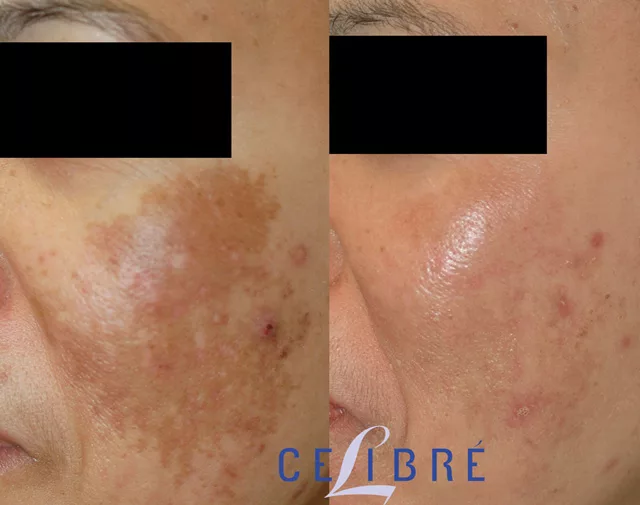
People with melasma have pigment cells that react too strongly to hormonal changes. These cells produce excessive melanin which results in dark patches forming on the skin. Pregnancy together with birth control pills and menopause serve as frequent causes. Because it’s tied to hormones, melasma is considered a chronic condition rather than something you can “cure.”
The goal with melasma treatment is to slow down the pigment production. The skin discoloration will gradually disappear through steady use of products but people need to keep up their skincare routine to preserve the results. The main difficulty exists because melanin pigment distributes itself across multiple layers of the skin structure. The pigment responds well to topical products which block pigment formation when it exists near the surface of the skin. The deeper the penetration, the longer it will take to see results and the outcomes might be less predictable. Topical creams exist as the primary treatment method because they work to reduce melanin production in the skin. The medical community generally advises against using lasers as a treatment option for melasma. The treatment leads to skin discoloration instead of making it better.
Sun spots exist as a separate classification from other skin conditions. UV exposure leads to the development of solar lentigines and freckles and liver spots and various other pigment marks.
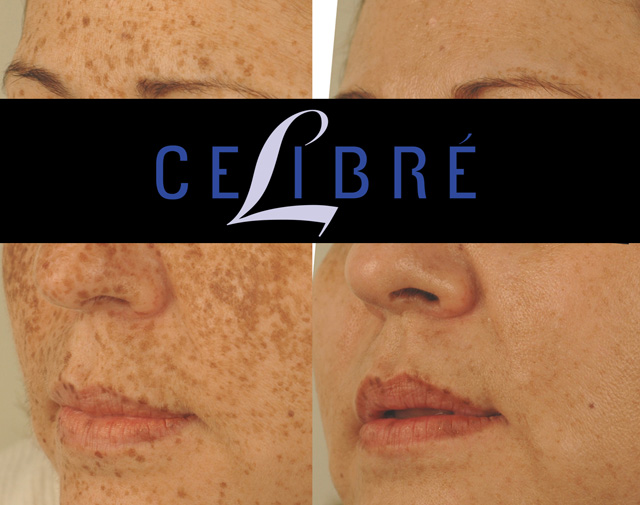
These skin growths appear at the uppermost layer of skin which makes them simpler to treat. Sun spots exist independently from hormonal changes because they do not share any connection with melasma. The skin develops these spots because of prolonged sun exposure which leads to photoaging.
Sun spots respond extremely well to laser treatment. The technology uses q-switched Class IV medical lasers to deliver short high-energy light pulses which break down pigment in a fast process. The body removes the pigment after it breaks down into smaller pieces. A few treatments may be needed depending on the size and depth of the spot. The good news is that once a sun spot is removed, it doesn’t grow back. The treatment results in skin that appears more uniform in tone and free of blemishes.
Here’s a quick way to understand the difference between the two:
Both melasma and sun spots create discoloration, but understanding the difference is the key to choosing the right plan. If you’re unsure which one you have, it’s worth getting a professional evaluation. That way you avoid treatments that won’t work and focus on what will actually help.
If you’d like guidance or want to explore your options, our office is here to help. We can walk you through effective programs designed for both melasma and sun spots so you can feel confident about your skin again.