
If you are tired of shaving, waxing, or plucking unwanted hair, laser hair removal can sound like the perfect long-term solution. But before starting treatment, one of the most common questions is: Does laser hair removal last forever?
Laser hair removal can produce a significant and long-lasting reduction in unwanted hair, but describing it as guaranteed permanent hair removal can be misleading. Many patients experience dramatically less hair after completing a series of treatments. However, some hair can eventually grow back, and occasional maintenance treatments may be needed.
At Celibre Medical, our goal is to help patients understand what laser hair removal can realistically achieve and why results vary from person to person.
Does Laser Hair Removal Last Forever or Is It Temporary?
So, does laser hair removal last forever? The most accurate answer is that laser hair removal is designed to provide long-term hair reduction rather than guarantee that every treated hair will disappear permanently.
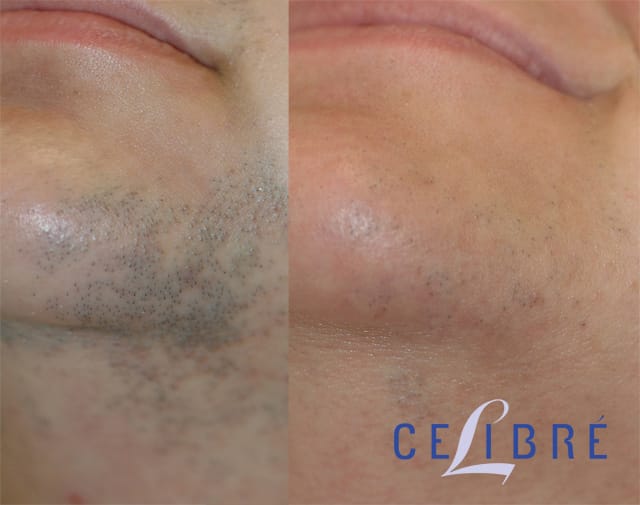
Laser treatment damages targeted hair follicles, making it difficult for them to produce new hair. Successfully treated follicles may stop producing visible hair for a very long time. Other follicles may eventually recover or produce hair that is finer, lighter, and less noticeable than it was before treatment.
New hair growth can also develop over time because of hormonal changes, aging, medications, or other biological factors.
This is why laser hair removal is generally discussed in terms of permanent hair reduction rather than complete permanent hair removal.
How Does Laser Hair Removal Work?
To understand how long the results last, it helps to understand how laser hair removal works.
Medical hair removal lasers deliver controlled light energy into the skin. The pigment, or melanin, in the hair absorbs this energy. The light is converted into heat, which damages structures within the hair follicle responsible for producing hair.
The goal is to damage the follicle enough that future hair growth is significantly reduced while minimizing damage to the surrounding skin.
However, the laser cannot effectively target every hair during a single treatment.
Hair naturally moves through different stages of its growth cycle. Laser hair removal is generally most effective when hair is in the active growth, or anagen, phase. Because only a portion of the hairs in a treatment area are actively growing at any given time, multiple sessions are necessary.
Is Laser Hair Removal Permanent?
Laser hair removal can provide long-lasting results, but individual outcomes vary.
After completing an appropriate series of treatments, patients often notice that much less hair grows in the treated area. Hair that does return may also be thinner, finer, or less noticeable.
At Celibre Medical, our laser hair removal programs have historically been designed to achieve substantial long-term reduction, with many patients experiencing approximately 75% to 95% permanent hair reduction after a series of 6 to 8 treatments. Individual results cannot be guaranteed and depend on factors such as hair color, skin type, treatment area, hormones, and treatment consistency.
This reduction can make everyday hair management much easier compared with continuously shaving or waxing.
Why Does Hair Grow Back After Laser Hair Removal?
Seeing some hair return after treatment does not necessarily mean that laser hair removal failed.
Several factors can contribute to regrowth.
Hair follicles are not all active at the same time. Some follicles may have been dormant during previous treatments and become active later. Other follicles may have been damaged but not completely disabled.
Hormonal changes can also stimulate hair growth. This can be particularly noticeable in areas such as the face, chin, neck, and other hormonally influenced regions.
The amount of regrowth therefore differs from one person to another.
How Long Does Laser Hair Removal Last?
For many patients, the results of laser hair removal can last for years, especially after completing the recommended treatment series.
There is no universal timeline, however. One person may experience very little regrowth for a long period, while another may notice some new hair sooner.
If hair returns, it is often less dense than the original growth. Maintenance sessions can be used to target these remaining or newly active hairs.
Instead of thinking of laser hair removal as a one-time procedure that guarantees a lifetime without hair, it is more realistic to consider it a long-term hair reduction strategy.
How Many Laser Hair Removal Treatments Do You Need?
Most patients need multiple treatments because of the natural hair growth cycle.
At Celibre Medical, a typical program may involve approximately 6 to 8 laser hair removal treatments, although the exact number varies according to the individual.
Factors that can influence the number of treatments include:
- Treatment area
- Hair thickness and density
- Hair color
- Skin tone
- Hormonal influences
- Type of laser being used
- Timing between appointments
- Individual response to treatment
Staying consistent with your recommended schedule is important because treatments need to target hairs as they enter an active growth phase.
What Areas Can Be Treated With Laser Hair Removal?
Laser hair removal can be performed on many areas of the face and body where unwanted hair is a concern.
Common treatment areas include the underarms, legs, bikini area, back, chest, arms, neck, upper lip, chin, and face.
Results can differ by treatment area. For example, hormonally influenced facial hair may require more ongoing management than hair in some body areas.
A professional evaluation can help establish realistic expectations for the area you want treated.
Does Hair Grow Back Thicker After Laser Hair Removal?
Typically, successfully treated hair does not simply return thicker because it was exposed to laser energy.
When regrowth occurs, many patients find that the remaining hair is finer or less dense.
However, hair growth patterns can change for reasons unrelated to the treatment itself. Hormonal changes and certain medical or biological factors can affect the amount and thickness of hair that develops over time.
If you notice significant or unexpected changes in hair growth, discussing them with a qualified medical professional may be appropriate.
Who Gets the Best Results From Laser Hair Removal?
Hair color, skin tone, and the laser technology used can all influence results.
Because laser hair removal targets pigment in the hair, darker and coarser hairs often provide a strong target for the laser. Very light blond, gray, white, or some red hairs contain less melanin and may respond poorly to conventional hair removal lasers.
Skin tone is another important consideration. Modern medical laser systems include technologies designed for different skin types, but choosing the appropriate wavelength and treatment settings is essential for both safety and effectiveness.
This is one reason laser hair removal should not be approached as a one-size-fits-all procedure.
Can Maintenance Treatments Make Results Last Longer?
Yes. Some patients choose occasional maintenance treatments to manage hair that appears after their initial treatment series.
How often maintenance is needed varies widely. Some patients may need very little additional treatment, while others—particularly those with hormonally driven hair growth—may benefit from periodic sessions.
Maintenance treatments can target newly active follicles and help preserve the overall reduction achieved during the original treatment program.
Laser Hair Removal vs. Shaving and Waxing
One of the biggest differences between laser hair removal and traditional methods is how they affect hair growth.
Shaving cuts hair at the skin’s surface without affecting the follicle. This is why hair begins appearing again relatively quickly.
Waxing pulls hair from the follicle, so results generally last longer than shaving. However, the follicle remains capable of producing another hair.
Laser hair removal is different because it targets the follicle itself. By damaging the structures responsible for hair production, laser treatment can create a much longer-lasting reduction in unwanted hair.
Does Laser Hair Removal Last Forever? The Bottom Line
So, does laser hair removal last forever? Laser hair removal can produce significant, long-term, and sometimes very durable hair reduction, but it cannot guarantee that you will never see another hair in the treated area.
After a complete treatment series, many patients enjoy substantially less hair for years. Some may experience limited regrowth and choose occasional maintenance sessions.
At Celibre Medical, our laser hair removal programs are customized according to skin type, hair characteristics, treatment area, and individual response. Our experience with medical laser technology allows us to select appropriate treatment options while focusing on both safety and effective long-term hair reduction.
If you are considering laser hair removal, a professional consultation is the best way to determine how your hair and skin characteristics may affect your results and what you can realistically expect from treatment.