
Safe, Personalized Acne Treatment Plans
At Celibre Medical, we treat acne differently. Acne affects far more than your skin. It can affect your confidence, your daily routine, and your overall quality of life. That’s why we focus on safe, effective, and fully personalized acne treatment plans built around your needs.
Part of that partnership is giving clear, honest advice about what helps acne and what can make it worse. One of the most common sources of confusion we see involves cosmetics, especially mineral makeup. Many patients ask us: Does mineral makeup help prevent breakouts? Based on years of clinical experience, our answer is usually no, and in many cases it may make acne worse.
Is Mineral Makeup Good for Acne?
Many acne patients come to us believing mineral makeup is “safe” or even good for acne-prone skin. That belief is largely driven by marketing rather than by science or clinical results.
Product labels and infomercials often present mineral makeup for acne using terms like oil-free, natural, mineral-based, or safe for sensitive skin. These phrases sound reassuring, but none of them mean a product is safe for acne-prone skin.
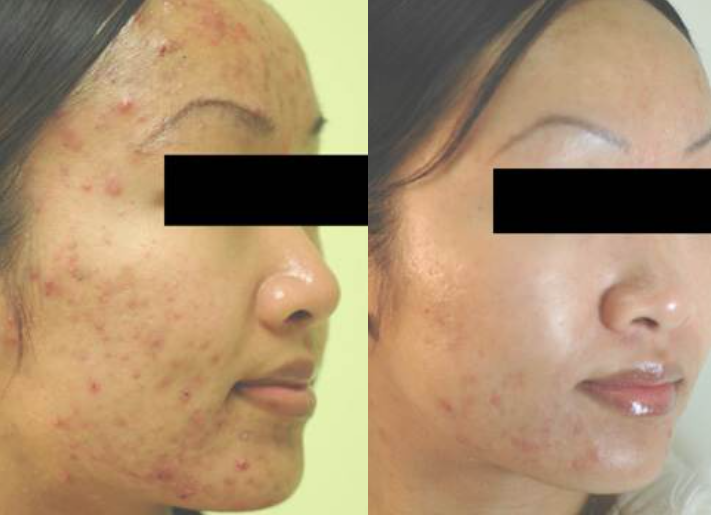
For any cosmetic to support acne treatment, it should be non-comedogenic, meaning it doesn’t clog pores. Clogged pores are the first step in forming a pimple. The American Academy of Dermatology recommends choosing makeup labeled “non-comedogenic,” “oil-free,” or “won’t clog pores” if you have acne. Many mineral makeup products avoid the term non-comedogenic and rely instead on marketing language that suggests safety without offering proof.
As a result, many patients dealing with mineral makeup acne are reluctant to stop using these products, because they’ve been told the makeup is helping when it may actually be contributing to their breakouts.
Common Mineral Makeup Ingredients and Acne
“Mineral makeup” isn’t a regulated term, so formulas vary widely. These are the ingredients our patients ask about most:
Bismuth Oxychloride and Acne
Bismuth oxychloride gives many mineral powders their pearly glow and smooth feel. The cosmetic form is usually made in a lab, and in our experience it’s one of the ingredients most often linked to itching, irritation, and breakouts in acne-prone patients. If you notice redness or small bumps after using a mineral powder, check whether bismuth oxychloride is on the label.
Does Mica Cause Acne or Clog Pores?
Mica is a shimmery mineral used in many powders and foundations. It isn’t generally considered highly pore-clogging on its own. However, mica and other fine mineral particles can build up on the skin, mix with oil and sweat, and be difficult to wash away completely, which may contribute to clogged pores in some people.
Does Mineral Oil Clog Pores or Cause Acne?
Mineral oil is a different ingredient from mineral makeup, though the names are often confused. Highly refined, cosmetic-grade mineral oil is generally considered non-comedogenic, and research has challenged the older belief that it causes breakouts. Because it is occlusive, though, a heavy product containing mineral oil can hold other pore-clogging ingredients against the skin. If you have acne-prone skin, focus on whether the whole product is non-comedogenic rather than on any single ingredient.
Mineral Makeup Residue and Breakouts
One of the biggest problems we’ve seen with mineral makeup is how hard it is to remove completely. In our clinical experience, mineral makeup can leave behind microscopic residue that settles into pores, even after several cleansings.
We’ve seen negative skin reactions during laser treatments when mineral makeup residue was still on the skin, which reinforces our concern that these particles stay embedded. This lingering residue may contribute to ongoing inflammation and acne.
Over the years, we’ve contacted several mineral makeup manufacturers to ask for clinical research or documentation supporting claims that their products are safe for acne patients. To date, we have not received any supporting evidence.
Most importantly, the acne patients we’ve worked with who stopped using mineral makeup have consistently seen noticeable improvement in their skin.
Our Position on Mineral Makeup and Acne
We are not against cosmetic companies or makeup in general. However, we strongly disagree with claims that mineral makeup is “safe” or “helpful” for acne-prone skin when there’s no evidence to back them up. Based on years of hands-on clinical observation, mineral makeup acne is a real and consistent issue.
Our priority is helping patients achieve clearer, healthier skin. That means recommending skincare and cosmetics that support acne treatment, not ones that quietly undermine it. We don’t promote specific brands, but we do help patients choose products that fit their treatment goals and long-term skin health. You may also find our top 10 acne myths and our guide to skin pH and acne helpful.
Tips for Wearing Makeup with Acne-Prone Skin
- Choose products clearly labeled non-comedogenic or “won’t clog pores,” not just “mineral” or “natural.”
- Remove all makeup every night with a gentle cleanser, and never sleep in it.
- Clean brushes and sponges regularly.
- Use less product, and avoid layering heavy powders over foundation.
- Use a non-comedogenic sunscreen. Here’s how to use sunscreen on your face.
- If breakouts continue, ask about professional options such as blue light acne treatment.
Frequently Asked Questions
Does mineral makeup help prevent breakouts?
In our experience, no. Mineral makeup is often marketed as acne-friendly, but most products aren’t proven to be non-comedogenic, and residue can stay in pores. Many of our patients’ breakouts improve after they stop using it.
What is the best makeup for acne-prone skin?
Look for oil-free products labeled non-comedogenic or “won’t clog pores,” and remove them completely every night. Our team can recommend options that fit your acne treatment plan.
Does bareMinerals or other mineral makeup cause acne?
No brand affects everyone the same way, and we don’t single out specific brands. Instead, check the ingredient list for bismuth oxychloride and heavy oils, look for a non-comedogenic label, and watch how your skin responds over a few weeks.
Is mineral oil comedogenic?
Cosmetic-grade mineral oil is generally considered non-comedogenic. However, heavy products containing it can trap other ingredients in pores, so acne-prone skin does best with lightweight, non-comedogenic formulas.
My esthetician said to use mineral makeup after my treatment. What does that mean?
Mineral makeup is sometimes suggested after facial treatments because it has fewer ingredients and often contains zinc oxide or titanium dioxide for sun protection. If you have acne-prone skin, ask your provider exactly which product to use and how long to wait, and make sure you can remove it completely. At Celibre, we give each patient specific aftercare instructions.
If you’re struggling with acne and aren’t sure whether your makeup is part of the problem, schedule a free consultation with our team.