
If you’ve noticed flat brown patches forming on your skin, especially on your face, hands, or shoulders, you’re probably wondering whether they’re sun spots. Knowing exactly what sun spots look like on skin is the first step toward understanding your skin and choosing the right care.
As providers who work with patients on skin pigmentation every day, we want to give you a clear, trustworthy answer to that question.
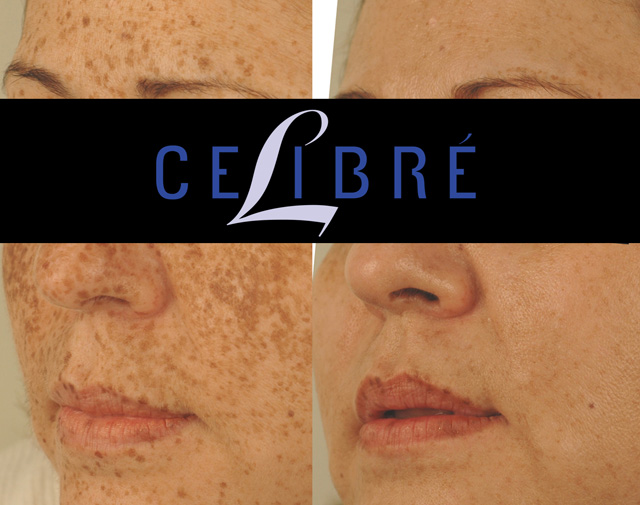
What Are Sun Spots on Skin?
Sun spots, also called solar lentigines, age spots, or liver spots, are flat patches of darker pigment that develop after years of UV exposure. The skin responds to repeated sunlight exposure by creating additional melanin, which serves as its defense mechanism. The melanin molecules start to form clusters, which produce the brown spots that appear on the skin surface.
They can appear at any age, but most people start noticing them after 30. People who spend a lot of time outdoors driving, working outside, or sunbathing often develop them earlier and in more locations.
What Do Sun Spots Look Like? Key Visual Characteristics
Color: Light to Medium Brown
Sun spots on skin typically appear in shades of tan, light brown, or medium brown. The color is usually uniform across the entire spot. The brown spot needs medical assessment because it shows multiple color changes, irregular shading patterns, and extreme dark-light contrasts.
Size: Freckle to Coin-Sized
Sun spots appear in sizes that vary between tiny freckles and coin-sized spots. Skin changes start as faint marks that develop into visible blemishes through time. A doctor should evaluate fast-growing skin spots before anyone begins laser treatment for their skin condition.
Shape: Round or Oval with Defined Edges
Sun spots usually show as circular or elliptical shapes that maintain their original shape. The shapes show no signs of uneven edges or broken symmetry. Medical evaluation becomes necessary when brown spots show unpredictable patterns along their edges.
Texture: Flat and Smooth
The flat nature of sunspots answers the question about their surface elevation. Sun spots have the same texture as the normal skin tissue that surrounds them. The condition remains symptom-free because it does not produce itching, bleeding, or any form of physical pain. Medical attention becomes necessary when a spot develops an elevation and produces itching or starts to bleed.
Note on seborrheic keratosis: Skin develops seborrheic keratosis as a result of sun exposure, which produces rough, waxy-textured growths. These spots exist as harmless entities that display separate characteristics from standard smooth sunspots.
Where Do Sun Spots Usually Appear on the Body?
Sun spots show up most in areas that receive the most direct, cumulative sun exposure. Common locations include:
- Face: especially the cheeks, nose, and forehead
- Hands and forearms: heavily exposed year-round
- Shoulders and upper chest: frequently exposed in warm climates
- Legs: particularly in people who spend time outdoors or tanning
Sun spots on the face and hands are the most common concerns we see in our Southern California patients, largely due to consistent sun exposure throughout the year.
Sun Spots vs. Other Brown Spots on Skin
Not every brown spot is a sun spot. The medical process requires doctors to identify skin conditions because each condition needs its own set of treatment methods.
Sun spots appear as darker skin patches, which develop because of genetic factors. Sun spots disappear when winter sets in, but melasma skin patches become permanent during the winter season.
Melasma appears as larger, lighter patches most commonly on the cheeks, forehead, and upper lip. The disease affects women more than men because their hormonal system becomes unbalanced during pregnancy and when they use hormonal birth control methods.
Sun spots show up differently from melasma because melasma patches become bigger and lose their distinct borders, but both conditions get worse when you spend time in the sun. Sun exposure causes melasma and sun spots to become more severe.
Post-inflammatory hyperpigmentation develops after acne, irritation, or skin injury. The skin damage starts with red or purple spots, which become brown in color when people with darker skin tones develop these marks.
Age spots are simply another name for sun spots. The medical terms “age spots” and “solar lentigines” function as synonyms, which also relate to the term “liver spots”.
What Do Cancerous Sun Spots Look Like? When to Be Concerned
Most sunspots prove harmless because they do not create any health risks. The signs that indicate medical attention are needed to take precedence over beauty treatments for spots that become evident.
A medical examination should happen right away when a person discovers a spot that shows these signs:
- The spot develops outside its normal shape as its edges transform into unrecognizable patterns
- A single lesion displays different shades, which appear as multiple distinct colors
- The skin area shows a quick darkening process, which happens during a brief time span
- The skin area shows new signs of elevation, while it starts to produce itching sensations, and blood appears
- The spot shows a distinct appearance that differs from all your other brown spots
Healthcare providers examine these spots through visual inspection, while they can also use a dermatoscope, which serves as a particular magnifying instrument to examine them more closely. Most of the time, diagnosis is straightforward. The medical team will perform a biopsy when they need to confirm whether melanoma or other dangerous conditions exist during their diagnostic process.
How Providers Confirm It’s a Sun Spot
The initial stage of clinical evaluation requires practitioners to perform visual inspections which include assessing the spot’s color together with its borders and its size and texture characteristics. Medical professionals use dreamscapes to examine skin pigmentation patterns which become visible through the skin’s outer layer. The screening method enables doctors to identify safe sun spots from dangerous skin problems which doctors can detect through typical testing methods.
Medical professionals take small skin samples during biopsies to identify any unusual tissue structures which appear during their initial examination.
Frequently Asked Questions
Q: Are sun spots raised or flat?
Sun spots exist as flat formations. They rest at the same level as the skin around them without showing any elevation. The presence of elevated or bumpy brown spots requires medical assessment to determine if they represent seborrheic keratosis or other medical conditions.
Q: What color are sunspots on skin?
The usual color of these spots shows as light to medium brown which people call tan or honey or caramel. The color tends to be consistent across the spot. The appearance of extreme color changes in one single spot needs medical evaluation because it creates a suspicious situation.
Q: Do sun spots have texture?
No. Typical sun spots are smooth and feel identical to the surrounding skin. The development of rough or scaly or waxy texture on a spot indicates it represents a separate kind of skin alteration.
Q: What’s the difference between sun spots and age spots?
There’s no difference they’re the same thing. The skin develops flat brown marks which people know as “age spots” and “sun spots” and “liver spots” and “solar lentigines” because of prolonged sun exposure.
Q: When should I see a provider about a sun spot?
You should schedule an evaluation when a spot changes its shape or shows fast growth or develops uneven borders or displays multiple colors or becomes elevated or starts to itch or produces bleeding. A professional evaluation will help you decide when to get help instead of waiting for the situation to get better.